President Mahama Endorses Local Content Reforms to Empower Businesses in the Mining Industry
Takoradi, Western Region, February 18, 2026
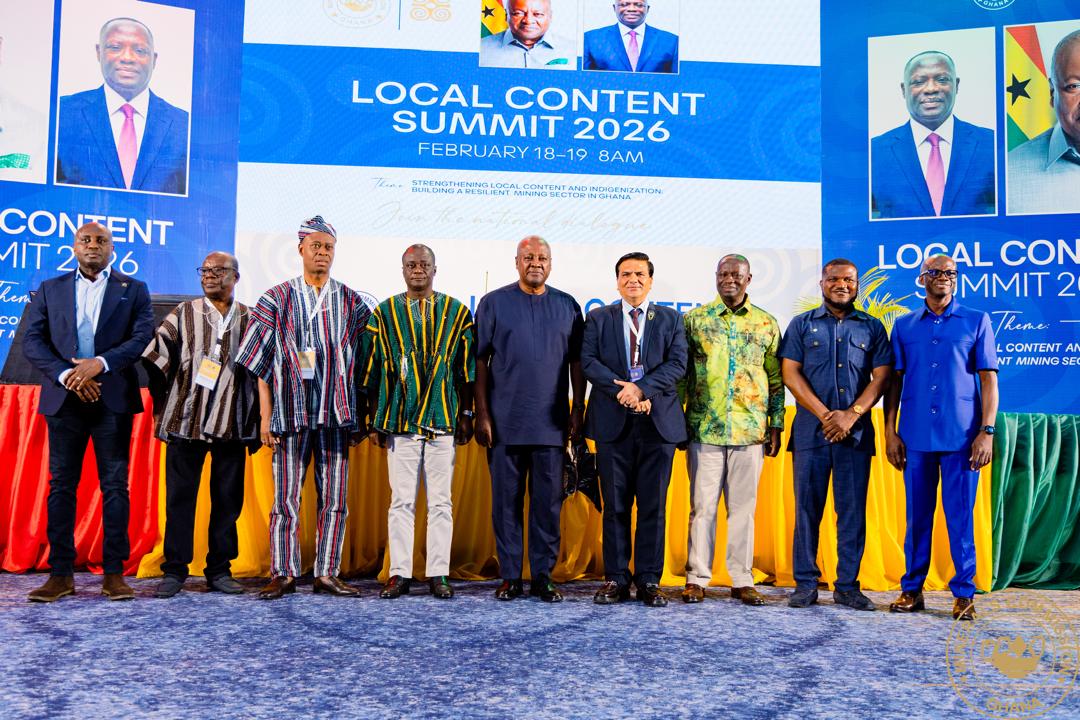
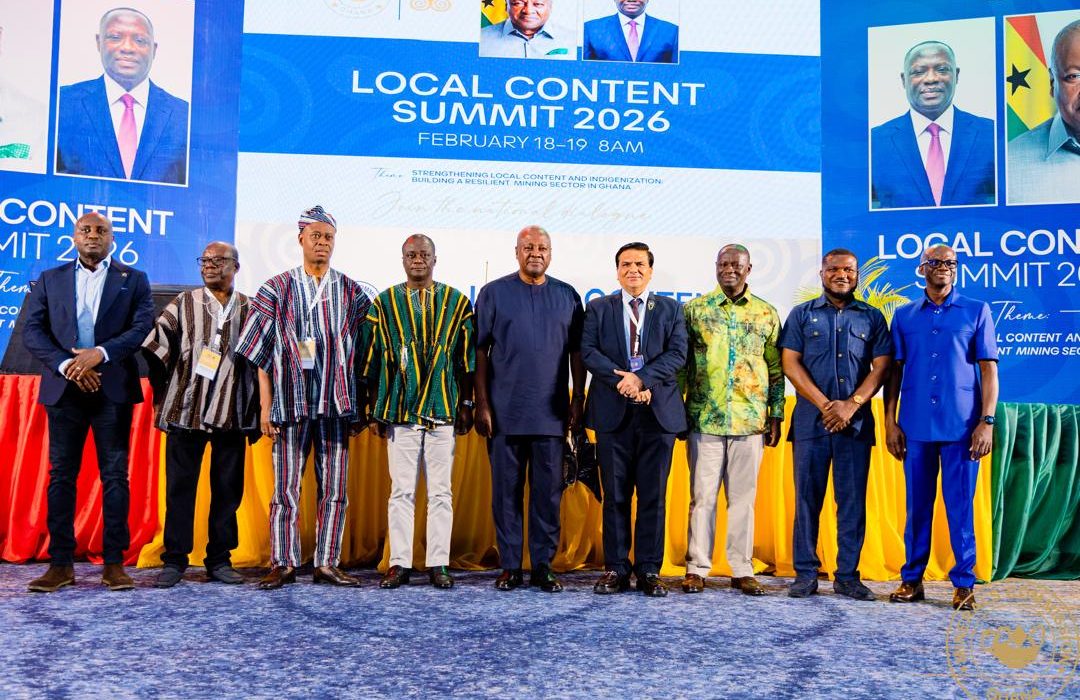
A set of reforms designed to increase Ghanaian participation and ownership in the mining sector has been unveiled. The landmark announcement was made by Mr. Isaac Tandoh, Chief Executive Officer of the Minerals Commission, at the maiden Mining Local Content Summit held at Planter’s Lodge in Takoradi. The two-day event is being held under the theme, “Strengthening Local Content and Indigenization: Building a Resilient Mining Sector in Ghana.”
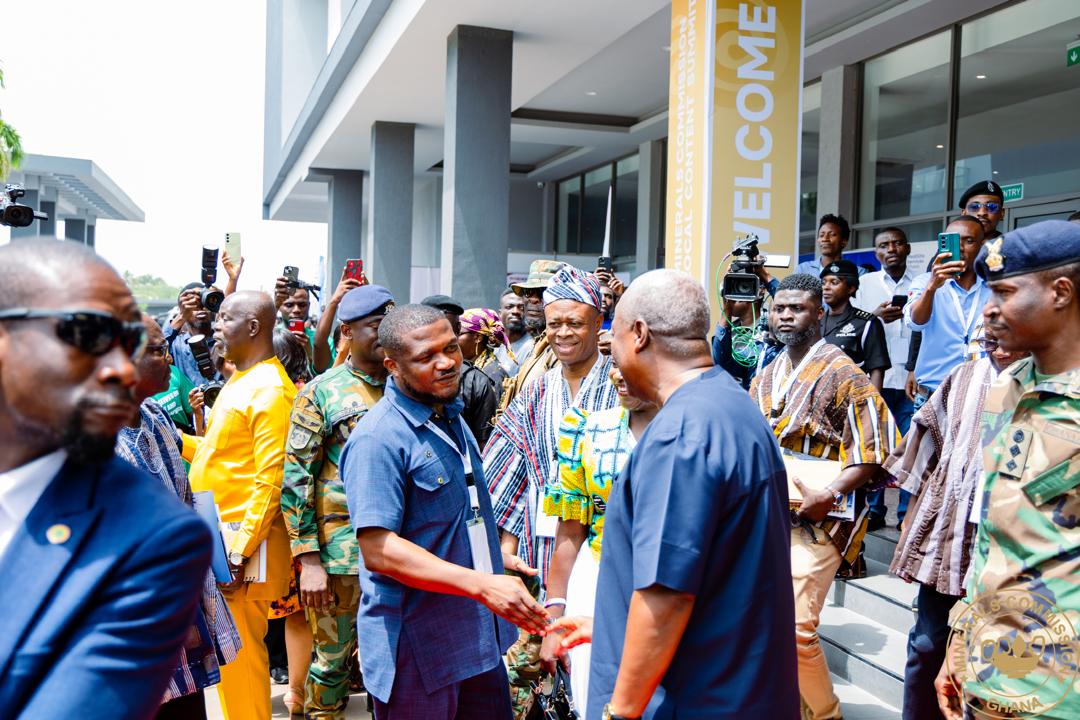
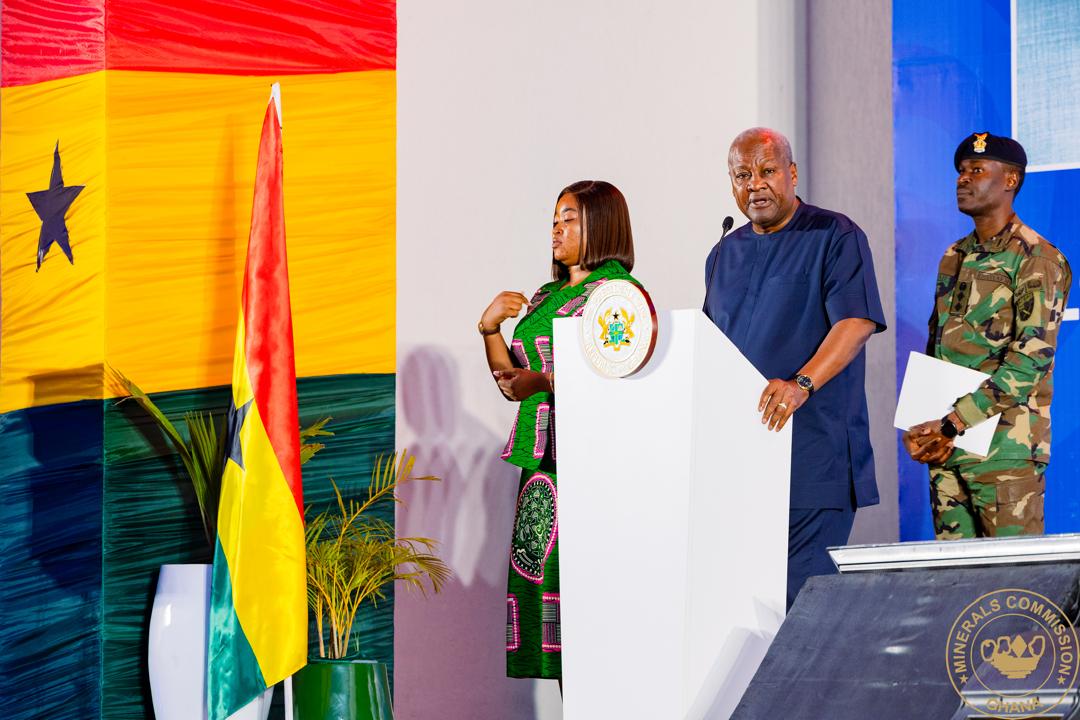
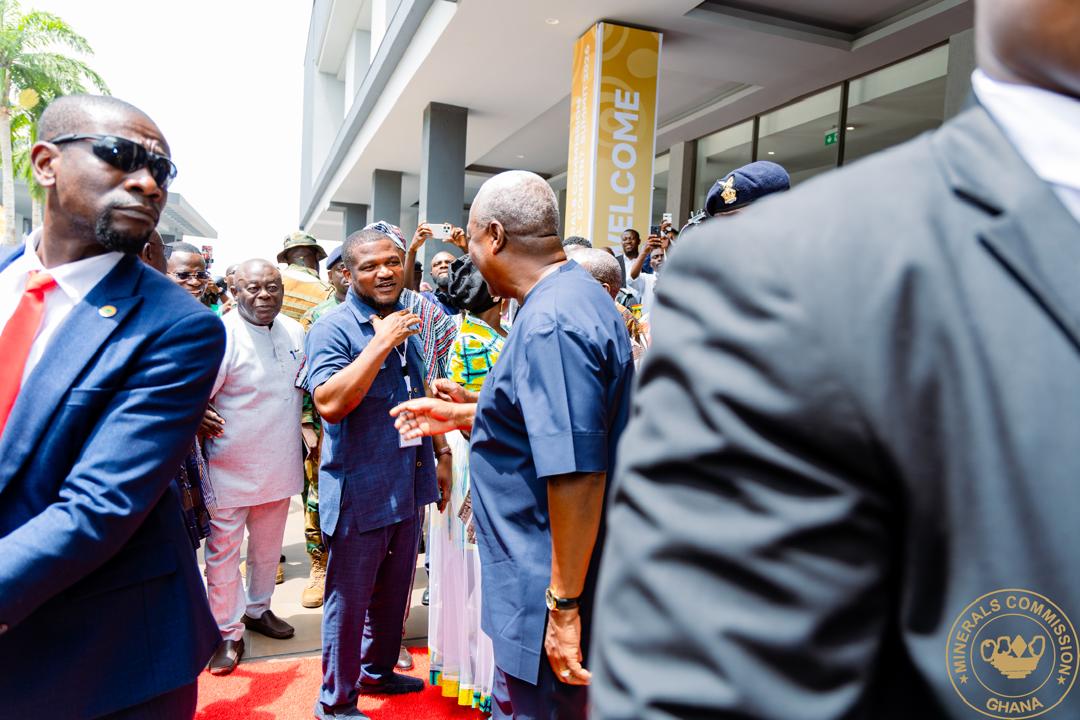
His Excellency John Dramani Mahama, President of the Republic, Guest of Honour for the event, delivered the keynote address, rallying support for the national “reset” agenda and championing the empowerment of local companies to secure commanding heights in the economy, particularly within the mining industry. President Mahama acknowledged the diligent efforts of the sector minister and commended the Board of the Minerals Commission, led by Ambassador William Ntow Boahene, for organising what he described as a transformative summit set to steer indigenous businesses towards sustainable economic growth. He outlined the government’s clear vision to deepen localisation and drive sustained national development. Following his address, the President formally opened the summit and toured the exhibition booths, engaging with mining support service providers and stakeholders showcasing their goods and services.
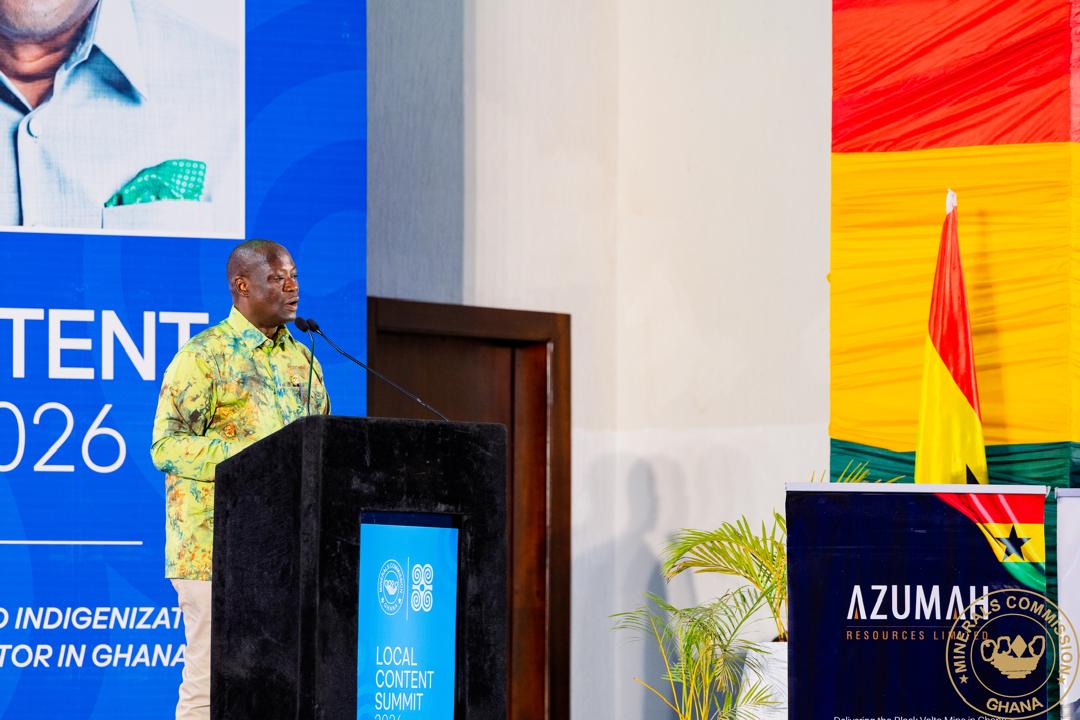
Reaffirming the government’s unwavering commitment to ensuring that Ghana’s mineral wealth directly benefits her citizens, the Minister for Lands and Natural Resources, Hon. Emmanuel Armah-Kofi Buah (MP), praised the Reset Agenda for its focus on economic sovereignty and the equitable distribution of mineral resources. He stressed that the nation’s natural endowments must be leveraged to fuel national development, funding critical investments in schools, hospitals, infrastructure, and industry.
While acknowledging the mining sector’s significant contribution to Ghana’s economy, Hon. Armah-Kofi Buah highlighted persistent gaps in local participation. He noted that although mining accounts for approximately 43% of merchandise exports, Ghanaian businesses capture less than 40% of procurement spending, with over 70% of high-value services still dominated by foreign suppliers. To bridge this gap, he emphasised the necessity of strategic partnerships, technology transfer, and robust capacity building to empower Ghanaian enterprises. He issued a strong warning against the practice of “fronting” which he characterised as a direct theft of national opportunity.
The Minister outlined several ongoing measures, including the Minerals Commission’s new Local Content and Procurement Policy Framework and the creation of a Special Purpose Vehicle (SPV) to catalyse downstream industrialisation. He urged stakeholders to envision a future where Ghana refines its own gold, develops local lithium-based industries, and equips its young engineers with the requisite tools to innovate. He concluded with a clarion call for a collective commitment to building an integrated, inclusive, and indigenised mining sector that secures Ghana’s long-term prosperity, issuing a final admonition: “Do not sell your birthright for crumbs when you can own the bakery.”
Echoing this sentiment, Mr. Isaac Tandoh, CEO of the Minerals Commission, emphasised that the reforms are designed to correct decades of imbalance in the ownership and control of the country’s mineral resources. “Employment is not the same as ownership. Labour is not the same as control. Our people are working in the mines, agreed, but do they own the mines?” Mr. Tandoh posited, underscoring the urgent need for Ghanaians to transition from labour participation to true equity and ownership.
The comprehensive reforms announced include:
• Revocation of Fraudulent Licenses: Over 300 small-scale mining licenses acquired through irregular means have been revoked.
• Operationalisation of District Mining Committees: These committees will now play a mandatory role in reviewing and recommending all small-scale licenses prior to approval.
• Overhaul of Mining Legislation: The Minerals and Mining Act (Act 703) and the Minerals and Mining Policy 2014 have been comprehensively reviewed, with new Legislative Instruments introduced to close legal loopholes.
• Ban on Mining in Forest Reserves: Legislative Instrument 2462, which previously permitted mining in forest reserves, has been revoked.
• Introduction of Medium-Scale Licensing: A new licensing category has been created to bridge the gap between small-scale and large-scale mining, expanding opportunities for Ghanaian miners.
• Reform of Stability and Development Agreements: Development agreements are being phased out due to systemic abuse, while a new, dynamic royalty regime will ensure Ghana captures greater value during periods of rising gold prices.
• Strengthened Local Content Rules: Local content provisions will now be strategically embedded into every mining agreement, procurement decision, and employment policy.
Mr. Tandoh stressed that these reforms are not intended to punish investors but to guarantee that Ghanaians share equitably in the benefits derived from their resources. He pledged the Commission’s readiness to enforce the laws “without fear or favour” and to partner with investors who view Ghana as “a partner in progress” rather than merely a destination for resource extraction. He also highlighted the Commission’s commitment to supporting Ghanaian entrepreneurs, traditional leaders, and local communities to ensure mining delivers tangible benefits while diligently addressing environmental and social costs.
A central pillar of the reform agenda is the aggressive elimination of “fronting” the illegal practice where foreign entities use Ghanaian nominees to secure mineral rights. Mr. Tandoh explicitly linked this practice to the surge in illegal mining (galamsey) and issued a stern warning to those complicit in it. “To our Ghanaian brothers and sisters who lend their names to such arrangements: open your eyes,” he cautioned. “You are not empowering yourself; you are enabling the disempowerment of your own people”.
In closing, Mr. Tandoh announced that the Minerals Commission is embarking on a comprehensive digital transformation drive, signaling a new era of efficiency and transparency in the regulation of Ghana’s mining sector.
The maiden Mining Local Content Summit marks a pivotal turning point for Ghana’s mining industry, with these bold reforms squarely aimed at reclaiming ownership, bolstering local participation, and ensuring the nation’s mineral wealth translates into sustainable and inclusive national development.