
+233 030 277 1318
+233 030 277 2783
info@mincom.gov.gh

Minerals House
#12 Switchback Road
Residential Area
Cantonment - Accra
GL- 060 -1131


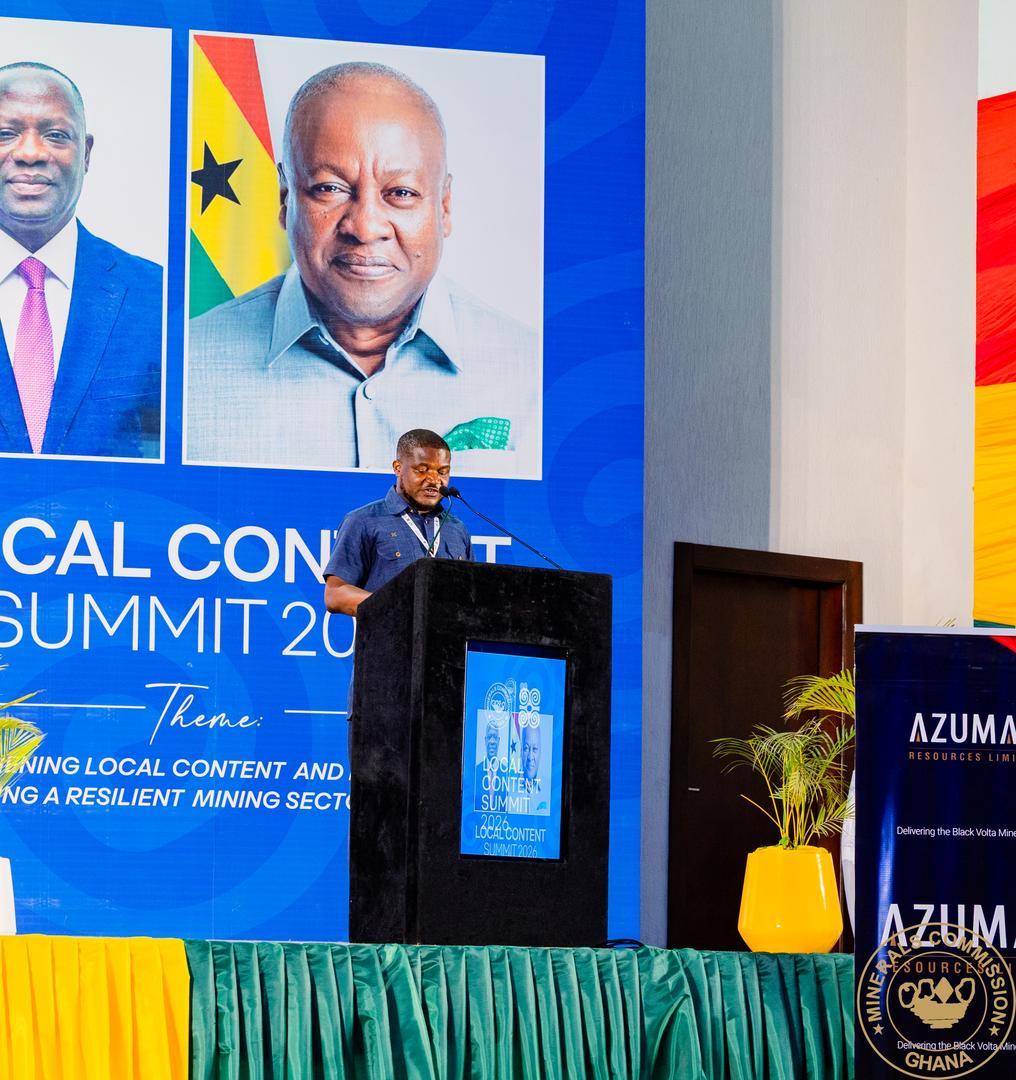
Wednesday, February 18, 2026. Over 300 licences revoked as new measures target greater local control and equity in mining industry.
Ghana’s Chief Executive of the Minerals Commission, Isaac Tandoh, has announced sweeping reforms aimed at increasing Ghanaian ownership and control in the country’s mining sector, saying employment alone is no longer enough.
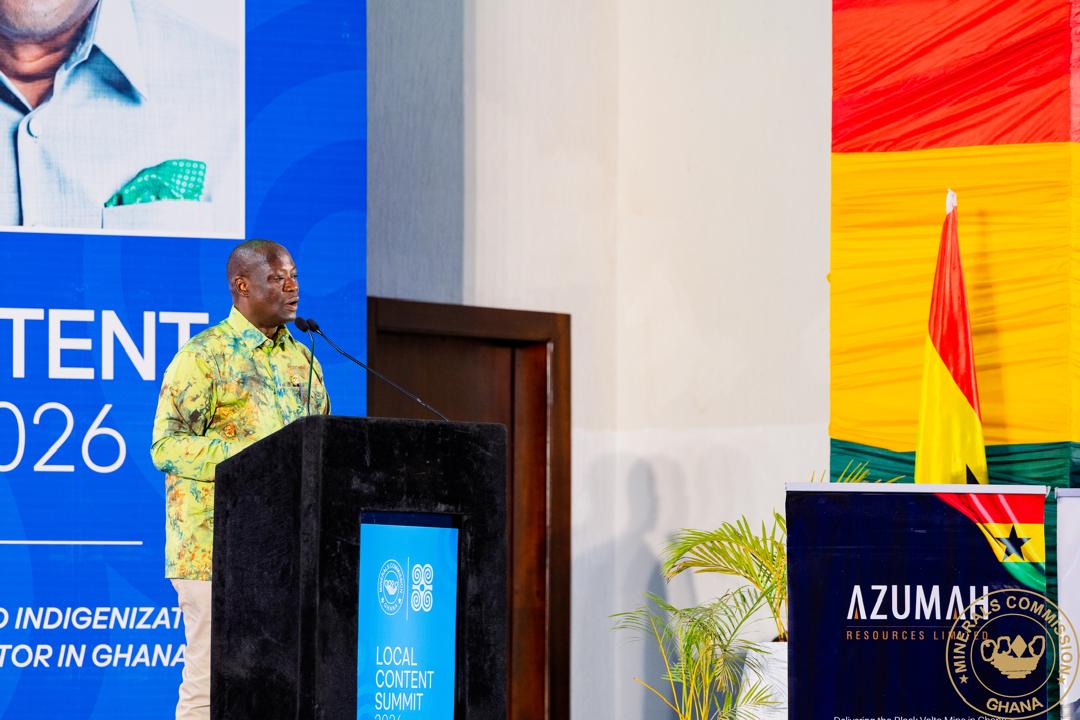
Speaking at the maiden Mining Local Content Summit in Takoradi, Mr Tandoh said the changes were designed to correct what he described as decades of imbalance in the ownership of the nation’s mineral resources.
“Employment is not the same as ownership. Labour is not the same as control,” he told participants. “Our people are working in the mines, agreed, but do they own the mines?”
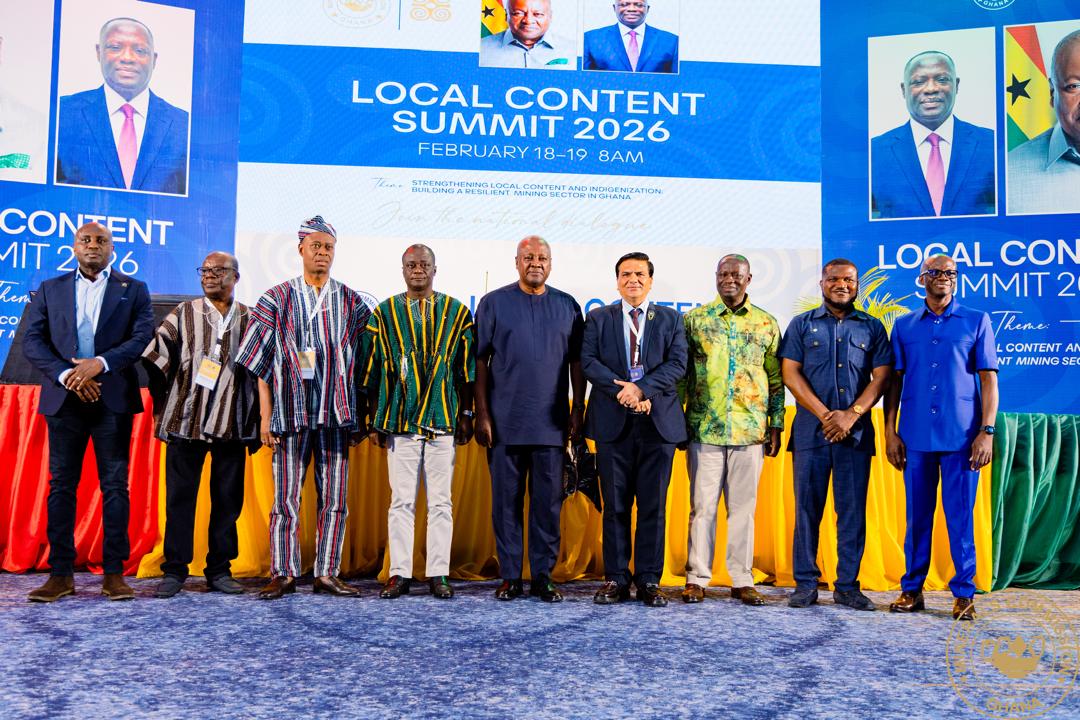
The two-day summit, attended by President John Dramani Mahama and other senior government officials, focused on strengthening local content and indigenisation in the mining industry.
Licences revoked.
Among the measures announced is the revocation of more than 300 small-scale mining licences acquired through irregular means.
Mr Tandoh said District Mining Committees would now play a mandatory role in reviewing and recommending all small-scale licence applications before final approval, in an effort to tighten oversight and improve accountability.
He also confirmed that the Minerals and Mining Act (Act 703) and the 2014 Minerals and Mining Policy have been comprehensively reviewed. New legislative instruments have been introduced to close legal loopholes.
Legislative Instrument 2462, which previously permitted mining in forest reserves, has been revoked.
New Licensing Legime.
As part of the reforms, a new medium-scale mining licence category has been introduced to bridge the gap between small- and large-scale operations and create more opportunities for Ghanaian operators.
Mr Tandoh also announced the phasing out of development agreements, citing what he described as systemic abuse. A new, more flexible royalty regime is expected to allow Ghana to capture greater value during periods of rising gold prices.
Local content provisions, he said, will now be embedded in every mining agreement, procurement decision and employment policy.
Crackdown on ‘Fronting’.
A key focus of the reforms is the elimination of “fronting” – an illegal practice in which foreign entities use Ghanaian nominees to acquire mineral rights.
Mr Tandoh linked the practice to the growth of illegal mining, commonly known as galamsey, and warned those involved to desist.
“To our Ghanaian brothers and sisters who lend their names to such arrangements: open your eyes,” he said. “You are not empowering yourself; you are enabling the disempowerment of your own people.”
He stressed that the reforms were not intended to punish investors but to ensure that Ghanaians benefit equitably from the country’s mineral wealth.
Digital Transformation.
The Minerals Commission is also embarking on a digital transformation drive to improve transparency and efficiency in the regulation of the mining sector, Mr Tandoh said.
He pledged that the Commission would enforce the law “without fear or favour” while working with investors who see Ghana as “a partner in progress”.
Officials say the reforms mark a significant shift in policy, aimed at strengthening indigenous participation and ensuring that mining revenues contribute to sustainable national development.
END
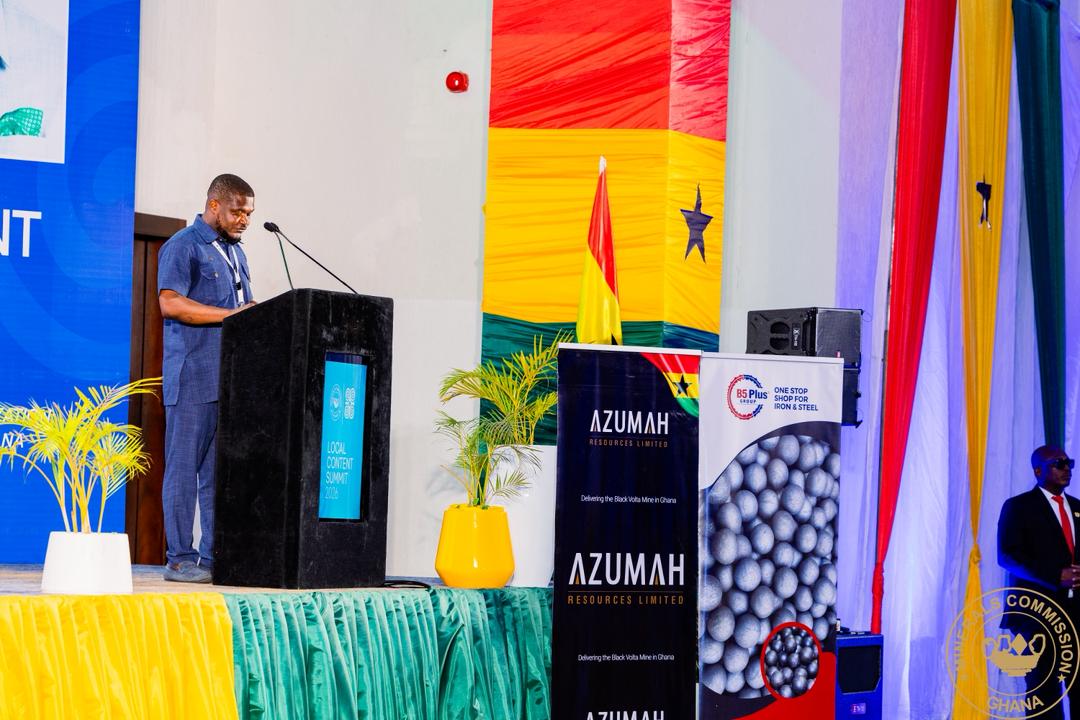
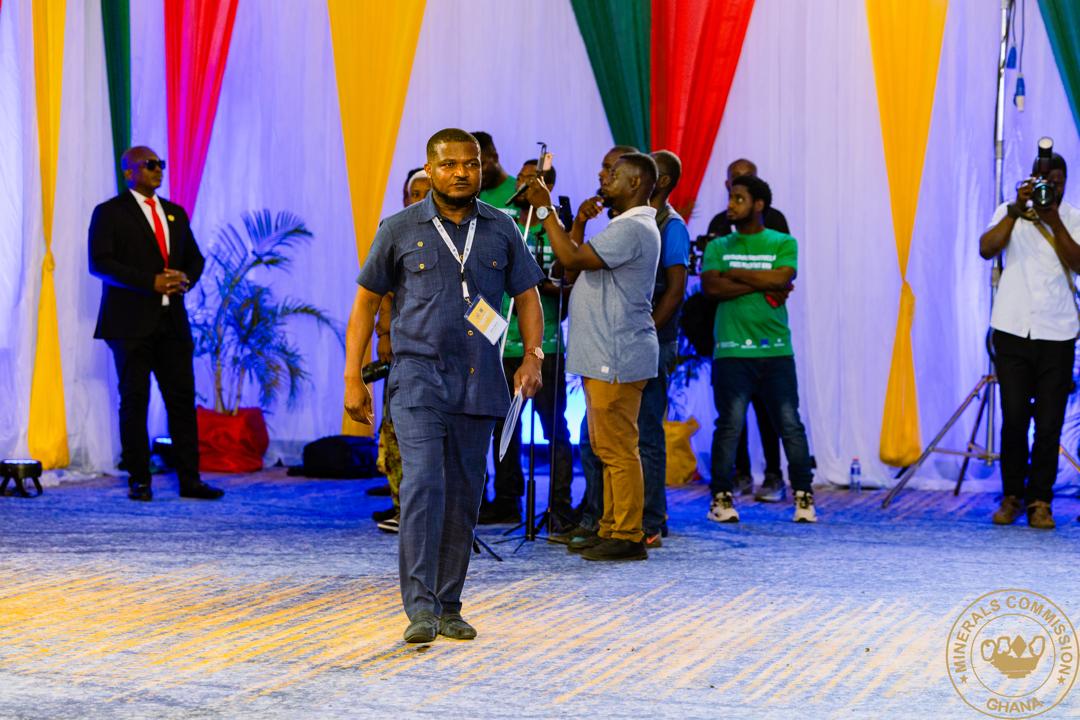
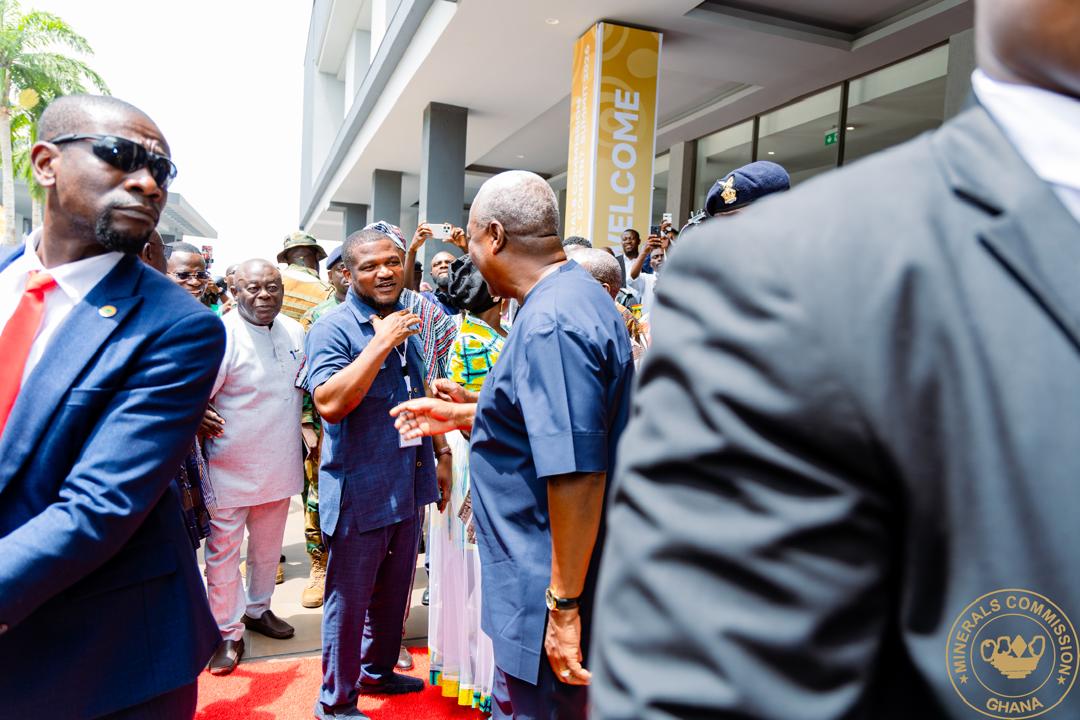
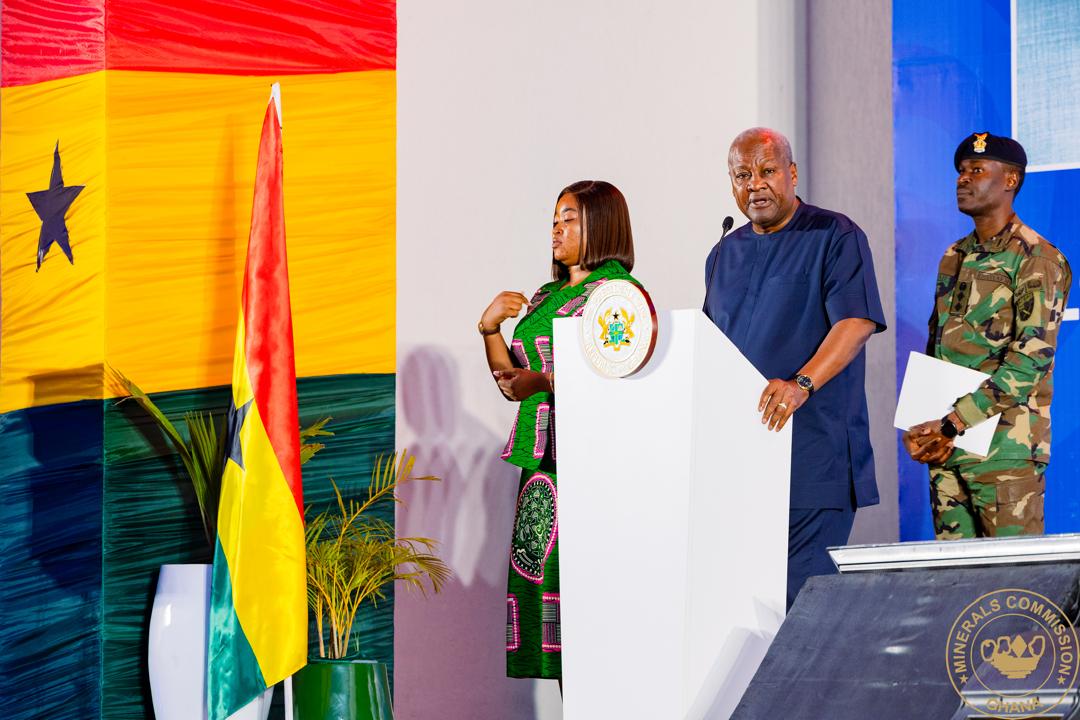
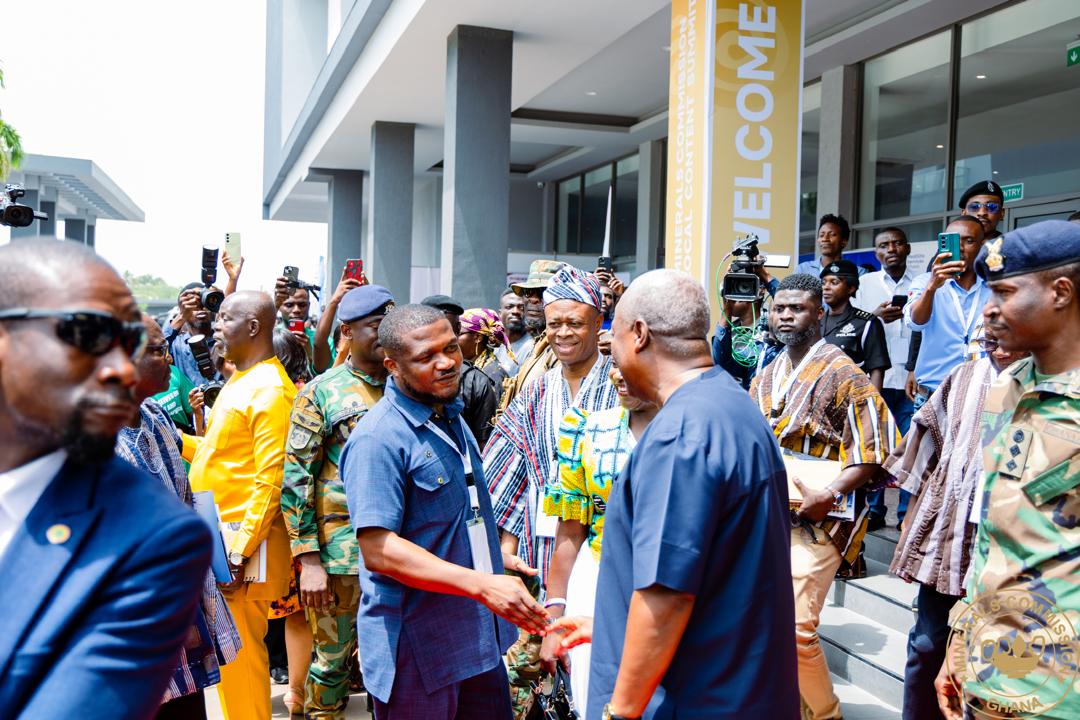
Takoradi, Western Region, February 18, 2026
A set of reforms designed to increase Ghanaian participation and ownership in the mining sector has been unveiled. The landmark announcement was made by Mr. Isaac Tandoh, Chief Executive Officer of the Minerals Commission, at the maiden Mining Local Content Summit held at Planter’s Lodge in Takoradi. The two-day event is being held under the theme, “Strengthening Local Content and Indigenization: Building a Resilient Mining Sector in Ghana.”
His Excellency John Dramani Mahama, President of the Republic, Guest of Honour for the event, delivered the keynote address, rallying support for the national “reset” agenda and championing the empowerment of local companies to secure commanding heights in the economy, particularly within the mining industry. President Mahama acknowledged the diligent efforts of the sector minister and commended the Board of the Minerals Commission, led by Ambassador William Ntow Boahene, for organising what he described as a transformative summit set to steer indigenous businesses towards sustainable economic growth. He outlined the government’s clear vision to deepen localisation and drive sustained national development. Following his address, the President formally opened the summit and toured the exhibition booths, engaging with mining support service providers and stakeholders showcasing their goods and services.
Reaffirming the government’s unwavering commitment to ensuring that Ghana’s mineral wealth directly benefits her citizens, the Minister for Lands and Natural Resources, Hon. Emmanuel Armah-Kofi Buah (MP), praised the Reset Agenda for its focus on economic sovereignty and the equitable distribution of mineral resources. He stressed that the nation’s natural endowments must be leveraged to fuel national development, funding critical investments in schools, hospitals, infrastructure, and industry.
While acknowledging the mining sector’s significant contribution to Ghana’s economy, Hon. Armah-Kofi Buah highlighted persistent gaps in local participation. He noted that although mining accounts for approximately 43% of merchandise exports, Ghanaian businesses capture less than 40% of procurement spending, with over 70% of high-value services still dominated by foreign suppliers. To bridge this gap, he emphasised the necessity of strategic partnerships, technology transfer, and robust capacity building to empower Ghanaian enterprises. He issued a strong warning against the practice of “fronting” which he characterised as a direct theft of national opportunity.
The Minister outlined several ongoing measures, including the Minerals Commission’s new Local Content and Procurement Policy Framework and the creation of a Special Purpose Vehicle (SPV) to catalyse downstream industrialisation. He urged stakeholders to envision a future where Ghana refines its own gold, develops local lithium-based industries, and equips its young engineers with the requisite tools to innovate. He concluded with a clarion call for a collective commitment to building an integrated, inclusive, and indigenised mining sector that secures Ghana’s long-term prosperity, issuing a final admonition: “Do not sell your birthright for crumbs when you can own the bakery.”
Echoing this sentiment, Mr. Isaac Tandoh, CEO of the Minerals Commission, emphasised that the reforms are designed to correct decades of imbalance in the ownership and control of the country’s mineral resources. “Employment is not the same as ownership. Labour is not the same as control. Our people are working in the mines, agreed, but do they own the mines?” Mr. Tandoh posited, underscoring the urgent need for Ghanaians to transition from labour participation to true equity and ownership.
The comprehensive reforms announced include:
• Revocation of Fraudulent Licenses: Over 300 small-scale mining licenses acquired through irregular means have been revoked.
• Operationalisation of District Mining Committees: These committees will now play a mandatory role in reviewing and recommending all small-scale licenses prior to approval.
• Overhaul of Mining Legislation: The Minerals and Mining Act (Act 703) and the Minerals and Mining Policy 2014 have been comprehensively reviewed, with new Legislative Instruments introduced to close legal loopholes.
• Ban on Mining in Forest Reserves: Legislative Instrument 2462, which previously permitted mining in forest reserves, has been revoked.
• Introduction of Medium-Scale Licensing: A new licensing category has been created to bridge the gap between small-scale and large-scale mining, expanding opportunities for Ghanaian miners.
• Reform of Stability and Development Agreements: Development agreements are being phased out due to systemic abuse, while a new, dynamic royalty regime will ensure Ghana captures greater value during periods of rising gold prices.
• Strengthened Local Content Rules: Local content provisions will now be strategically embedded into every mining agreement, procurement decision, and employment policy.
Mr. Tandoh stressed that these reforms are not intended to punish investors but to guarantee that Ghanaians share equitably in the benefits derived from their resources. He pledged the Commission’s readiness to enforce the laws “without fear or favour” and to partner with investors who view Ghana as “a partner in progress” rather than merely a destination for resource extraction. He also highlighted the Commission’s commitment to supporting Ghanaian entrepreneurs, traditional leaders, and local communities to ensure mining delivers tangible benefits while diligently addressing environmental and social costs.
A central pillar of the reform agenda is the aggressive elimination of “fronting” the illegal practice where foreign entities use Ghanaian nominees to secure mineral rights. Mr. Tandoh explicitly linked this practice to the surge in illegal mining (galamsey) and issued a stern warning to those complicit in it. “To our Ghanaian brothers and sisters who lend their names to such arrangements: open your eyes,” he cautioned. “You are not empowering yourself; you are enabling the disempowerment of your own people”.
In closing, Mr. Tandoh announced that the Minerals Commission is embarking on a comprehensive digital transformation drive, signaling a new era of efficiency and transparency in the regulation of Ghana’s mining sector.
The maiden Mining Local Content Summit marks a pivotal turning point for Ghana’s mining industry, with these bold reforms squarely aimed at reclaiming ownership, bolstering local participation, and ensuring the nation’s mineral wealth translates into sustainable and inclusive national development.
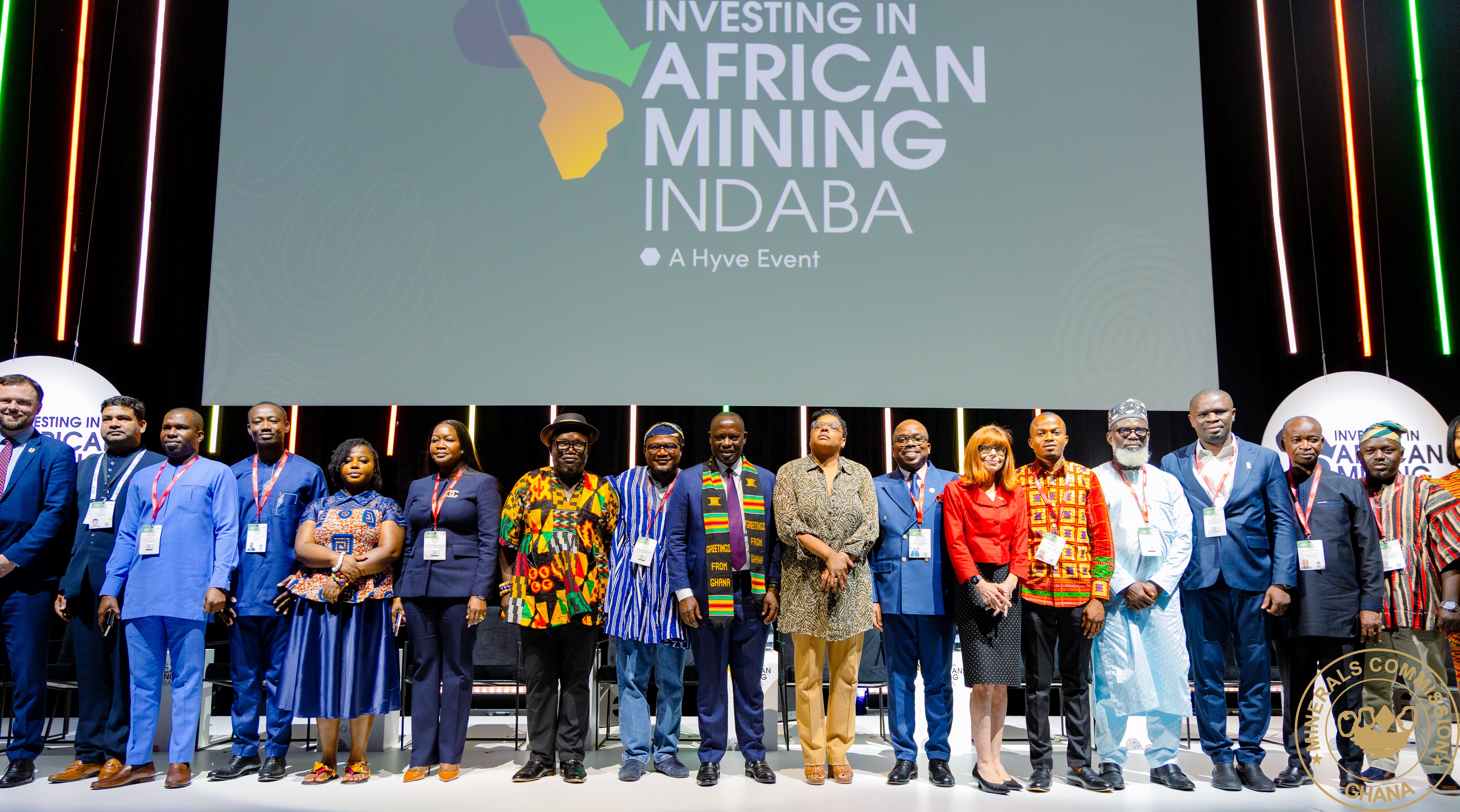
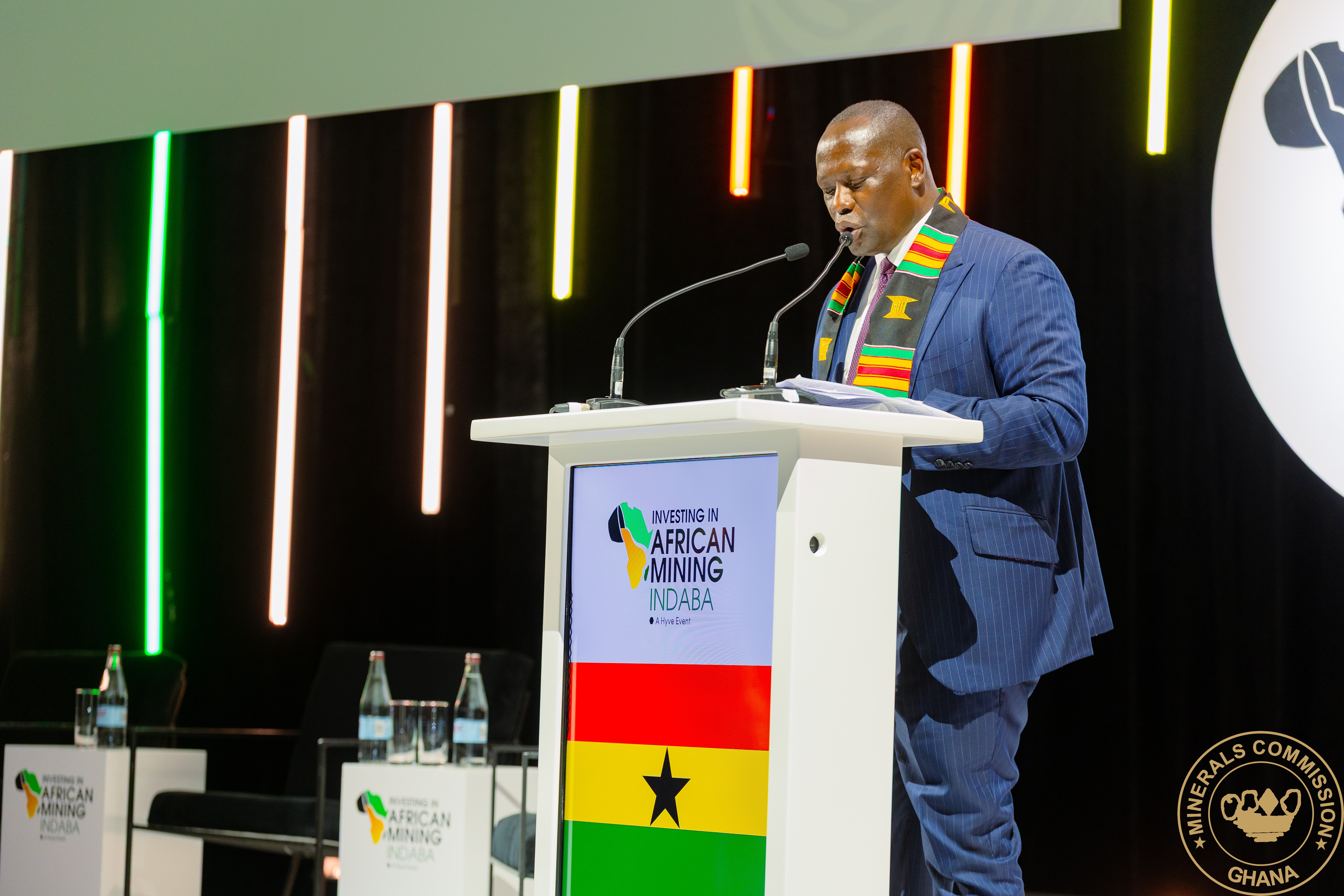
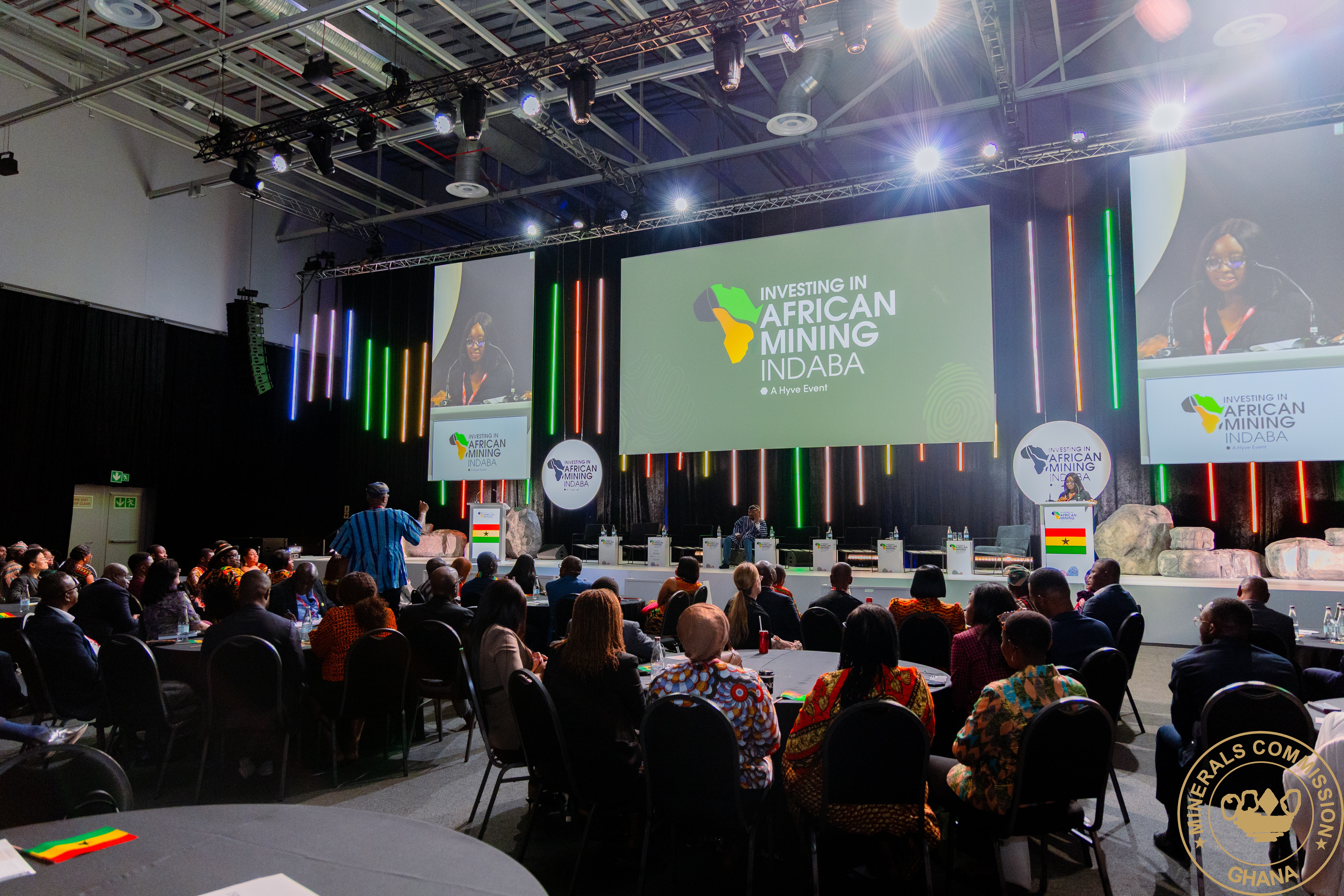
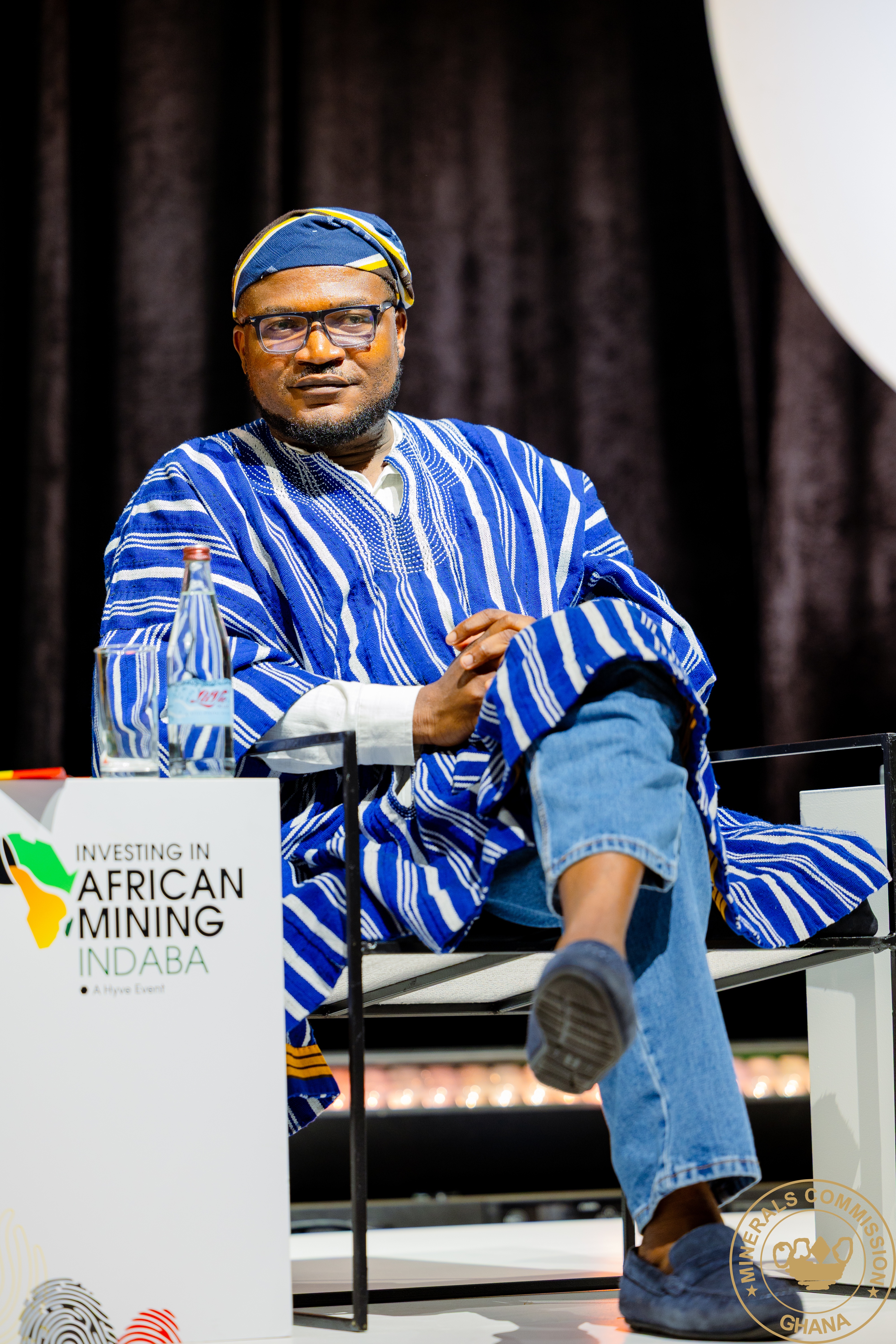
Cape Town, South Africa – Mr. Isaac Tandoh, Chief Executive Officer of the Minerals Commission, delivered an inspiring address at this year’s Investing in African Mining Indaba Country Showcase. The event, dubbed “Ghana Day” was held on Wednesday, February 11, 2026, at the Victoria Falls Stage 2 of the Cape Town International Convention Centre (CTICC). The platform served to articulate a forward-looking vision for the nation’s extractive sector.
The Minister for Lands and Natural Resources, Hon. Emmanuel Armah-Kofi Buah (MP), reinforced the government’s resolve to sustain an enabling environment that balances investor competitiveness with national development imperatives. In his address, the Minister reaffirmed that regulatory predictability, environmental stewardship, and community engagement remain the non-negotiable pillars of Ghana’s mining governance framework. Hon. Buah stated that the Ministry is aligning licensing, fiscal, and local content regimes to ensure that mining becomes a genuine engine of inclusive growth.
Far more than a ceremonial showcase, Ghana Day functioned as a deliberate strategic overture. The Ghanaian delegation engaged in targeted dialogues with sovereign wealth funds, multinational exploration companies, and development finance institutions. They advanced a cohesive narrative framing Ghana as a low-risk, high-opportunity gateway to West African resource development, positioning the nation as Africa’s premier mining hub.
Mr. Tandoh’s presentation focused on the Commission’s regulatory mandate, data transparency, and institutional credibility. The CEO positioned Ghana not merely as a participant in Africa’s mining story, but as a standard-bearer.
Also present at the ceremony was a cross-section of the Commission’s Board led by the Board Chairman, Ambassador William Ntow Boahene (Esq.), whose presence underscored the unified strategic leadership governing the sector.
Speaking before a high-level audience of global investors, sovereign envoys, and industry executives, Mr. Tandoh underscored the Commission’s ongoing reforms aimed at consolidating Ghana’s reputation. Central to his message was the Commission’s unyielding commitment to transparency and operational efficiency, particularly through the modernization of the country’s mineral rights cadastre system and the significant expansion of public access to high-quality geological data. He emphasized that a secured mineral title, backed by verifiable data and enforced by credible institutions, is the foundation upon which mutually beneficial partnerships are built.
Mr. Tandoh further noted that the country’s growth depends on its value-addition agenda and strengthening linkages with local content development. With ongoing investments in lithium and other “green” minerals, coupled with a maturing regulatory ecosystem, Ghana is increasingly viewed not only as a destination for extraction but as a hub for mining services, technology transfer, and regional supply chain integration.
The resonance of Ghana’s message was reflected in the calibre of diplomatic attendance. H.E. Benjamin Anani Quashie, Ghana’s High Commissioner to South Africa, set a tone of partnership, which was reinforced by a special address from H.E. Berenice Owen-Jones, the Australian High Commissioner to Ghana. Her presence underscored the growing international collaboration in Ghana’s mining sector and served as a strong vote of confidence in its governance trajectory. Their participation signals sustained international recognition of Ghana’s ability to manage its resource wealth responsibly while maintaining a hospitable climate for long-term capital.
Participating state entities, companies, and sector stakeholders included: Ghana Chamber of Mines, Ghana Gold Board (GoldBod), Mineral Income Investment Fund (MIIF), Ghana Integrated Iron and Steel Development Corporation (GIISDEC), Responsible Cooperative Mining and Skills Development Programme (rCOMSDEP), Cardinal Namdini Mining Limited, Newcore Gold Limited among others.
The Ghana Country Showcase demonstrated the nation’s readiness to attract global investors through a combination of rich mineral resources, progressive policies, and strong institutional leadership. With the Minerals Commission spearheading reforms and efficiency, Ghana is positioning itself as Africa’s leading destination for responsible and profitable mining investment.
Ghana Day 2026 was far more than a showcase; it was a strategic declaration. By bringing its entire value chain – from regulatory bodies and state funds to major miners, explorers and mining support service providers – to the global stage, Ghana demonstrated the institutional coherence and strategic diplomacy required to assert its place among the world’s most credible mining destinations and the leading producer of gold in Africa.
END.


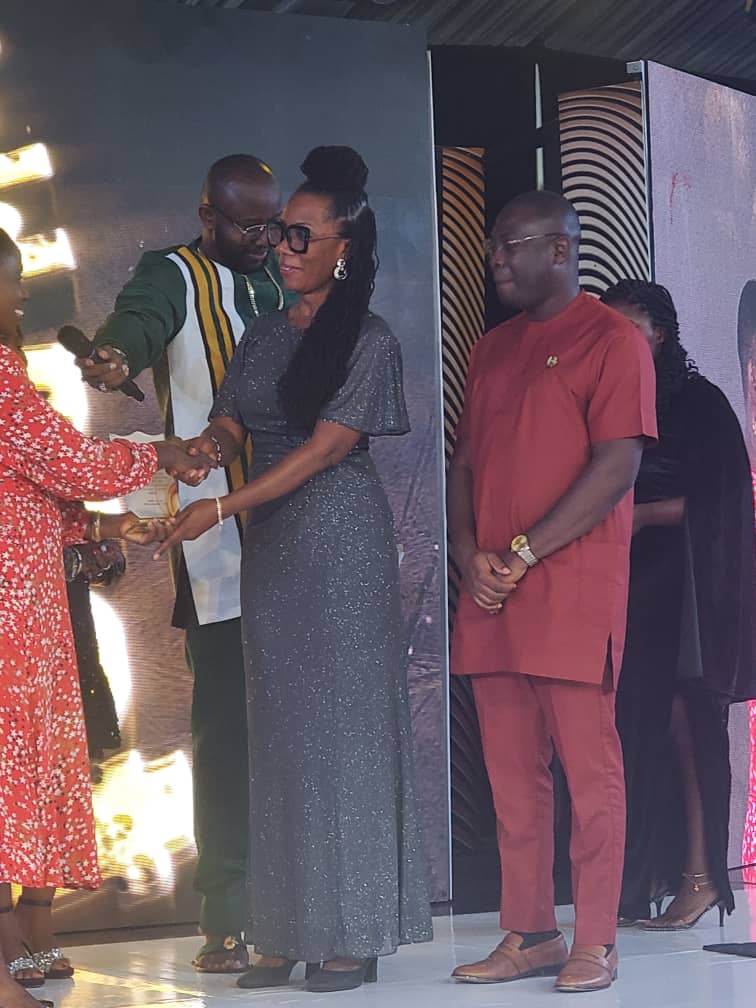
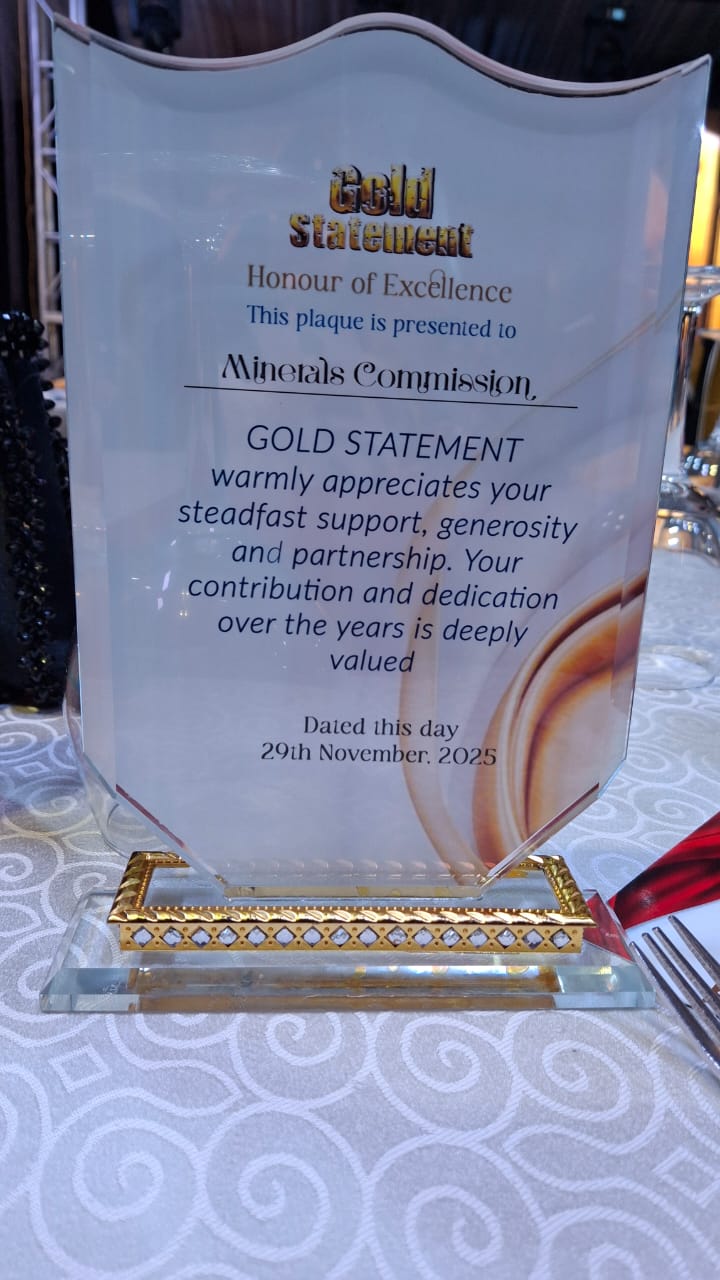
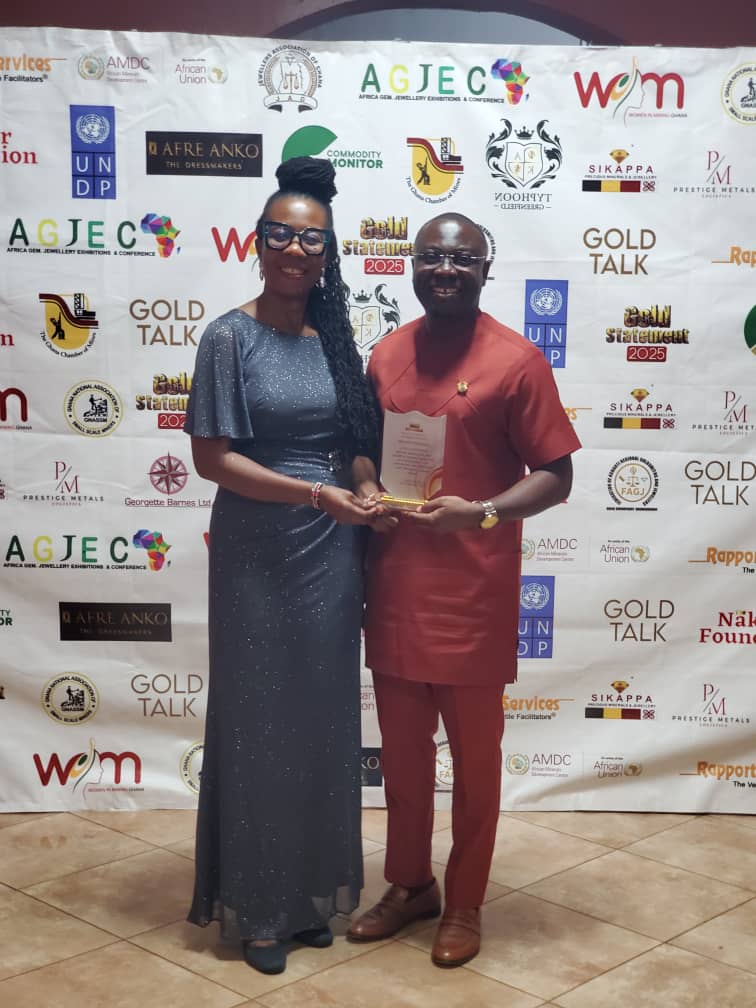
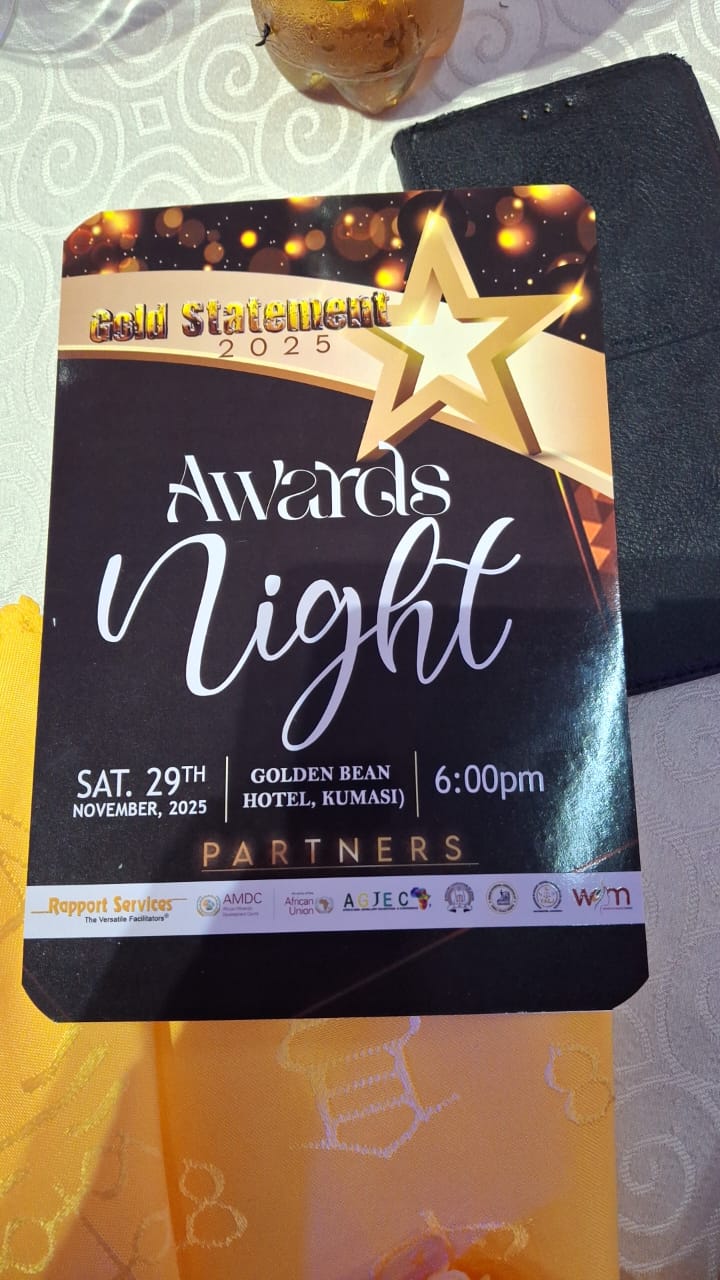
The Commission has been honoured for its exceptional regulatory leadership and enduring partnership with the jewellery industry. The recognition was bestowed during the prestigious Gold Statement 2025 Gala Night, held on November 29 at the Golden Bean Hotel in Kumasi.
The glittering ceremony marked the grand finale of the two-day Gold Statement summit, a platform that has significantly evolved from a national forum into a truly Pan-African dialogue concerning the jewellery and minerals sector.
Against a backdrop of dazzling jewellery showcases and cultural performances, the Commission was presented with a special award acknowledging its pivotal role in developing and regulating the industry. The honour specifically highlighted the Commission’s critical work in formalising Ghana’s artisanal and small-scale mining landscape, reinforcing the conference theme that the prosperity of Ghana’s jewellery sector is inextricably linked to responsible mining practices.
Speaking at the event, Madam Judy Nakuor Crayem, Chairperson of Gold Statement and CEO of Rapport Services, underscored the vital importance of collaboration between regulators and private industry. She noted that the award bestowed upon the Commission symbolised the sector’s deep appreciation for this continued partnership.
This award is not just for the Commission; it is a recognition of the shared vision we hold with every miner, jeweller, and designer in this room. It reaffirms our collective commitment to transforming Ghana’s mineral wealth into a source of sustainable livelihood, environmental responsibility, and global pride through jewellery. The Commission is committed to deepening this collaboration to ensure our gold tells a story of integrity from the mine to the market. The award positions the Commission as a key architect in building a transparent, sustainable, and globally competitive value chain for Ghanaian gold.
The Gold Statement 2025 successfully convened a diverse and influential gathering, blending high-level policy discussions with technical presentations and a major jewellery exhibition.
This year’s edition saw significant continental expansion, hosting patrons from Nigeria, Malawi, Botswana, Tanzania, and Côte d’Ivoire, among others. The programme attracted high-level sponsorship and collaboration from the United Nations Development Programme (UNDP), the African Union’s African Minerals Development Centre (AMDC), and the Africa Gem Jewellery Exhibitions & Conference.
Furthermore, the event successfully charted a coherent path for future industry development. A significant milestone included the cementing of a partnership between the Lapidary Institute of Ghana, industry stakeholders, and the Kwame Nkrumah University of Science and Technology (KNUST).
The 2025 summit concluded with a renewed focus on the convergence of responsible mining, championed by the Commission, skills development through academic collaboration, and international support to build a resilient, ethical, and globally competitive African jewellery industry.
– END –
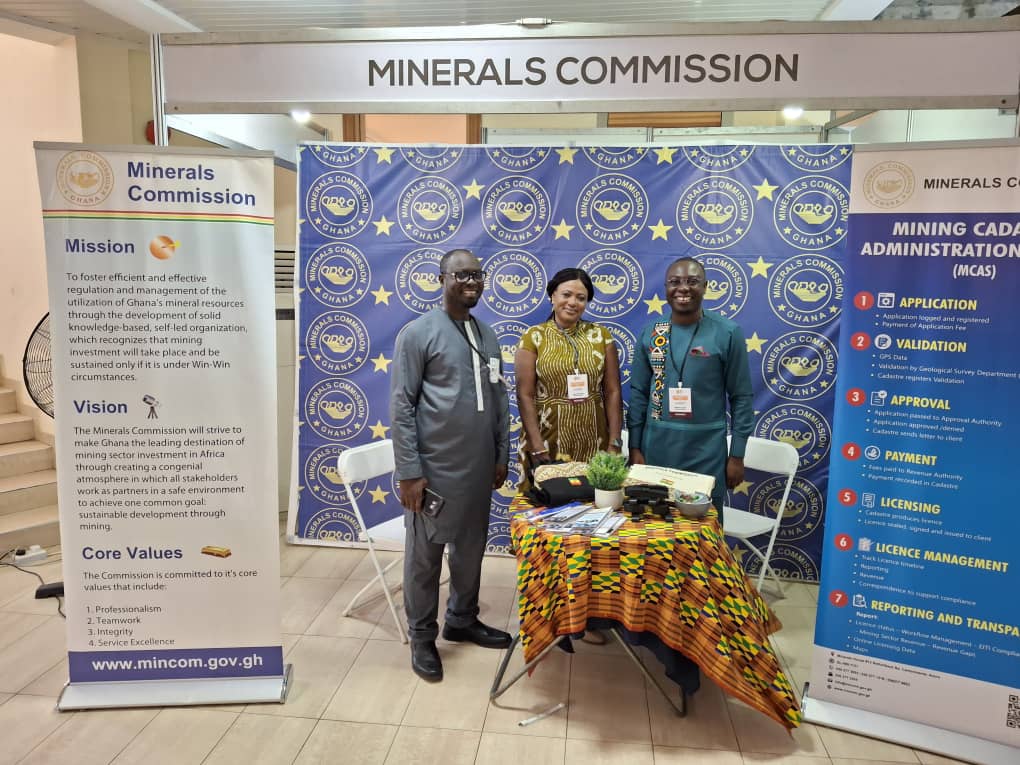
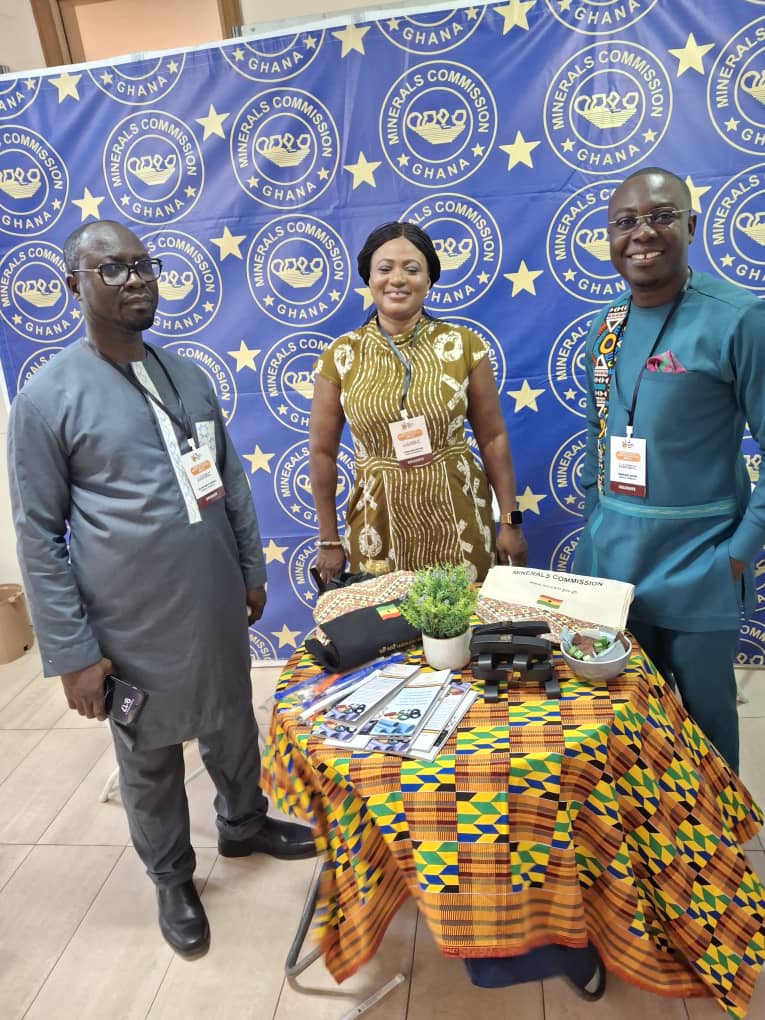
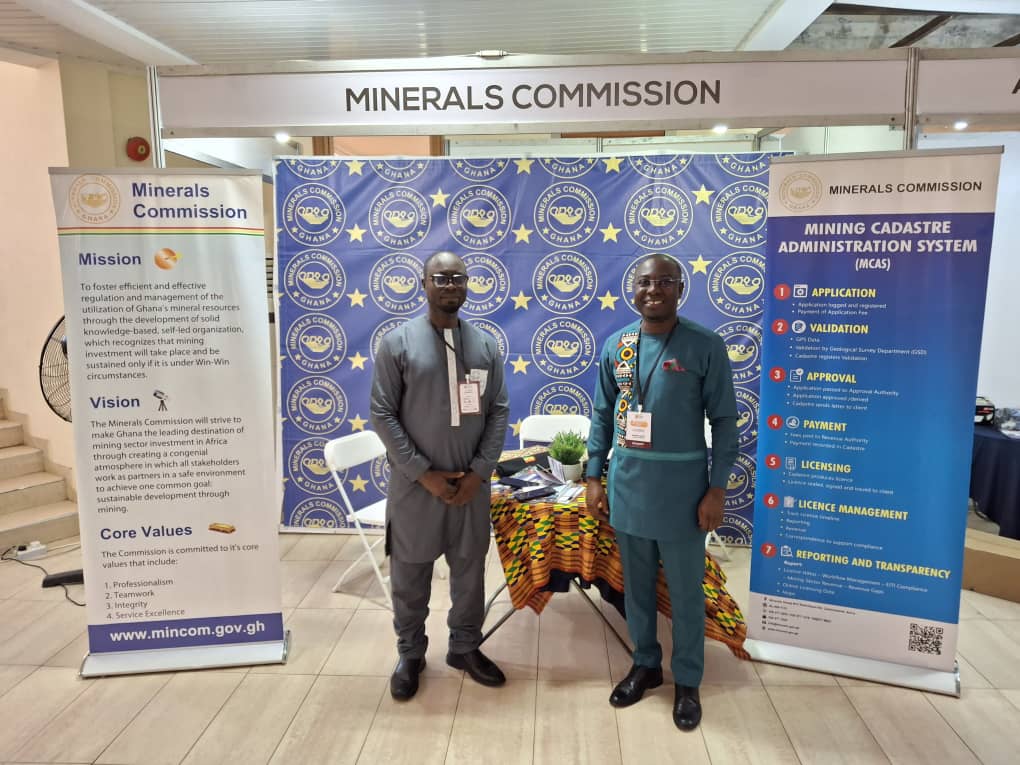
The Commission reinforced its pivotal role in advancing responsible mining and sustainable local content development through its active participation in the 2025 Mining Industry Marketing Expo (MIME). The event, organized by the Ghana Chamber of Mines in partnership with key sector stakeholders, was held at the University of Mines and Technology (UMaT) in Tarkwa from November 12-13, 2025. This annual forum convened industry leaders, businesses, and policymakers to explore pathways toward sustainable growth and enhanced local participation in Ghana’s mining sector.
Led by Madam Victoria Awuni, Deputy CEO for Policy Planning, Mineral Titles & Local Content, and Mr. Ben Birch-Mensah, Director of Local Content, the Commission’s delegation presented a range of strategic policies and programs designed to empower Ghanaian enterprises within the mining value chain. Through a dedicated exhibition booth, the Commission offered stakeholders an interactive platform to engage with regulatory frameworks, licensing procedures, and supplier development opportunities.
A central feature of the Expo was the Business-to-Business (B2B) Sessions, which enabled direct dialogue between mining companies, input manufacturers, and local suppliers. The Commission’s involvement in these sessions highlighted its ongoing commitment to fostering collaboration, promoting value addition, and facilitating meaningful partnerships within the industry.
By taking part in MIME 2025, the Commission reiterated its dedication to cultivating an enabling environment where local businesses can thrive. These efforts align with the broader objective of ensuring that Ghana’s mining sector remains competitive, inclusive, and anchored in sustainable national development.
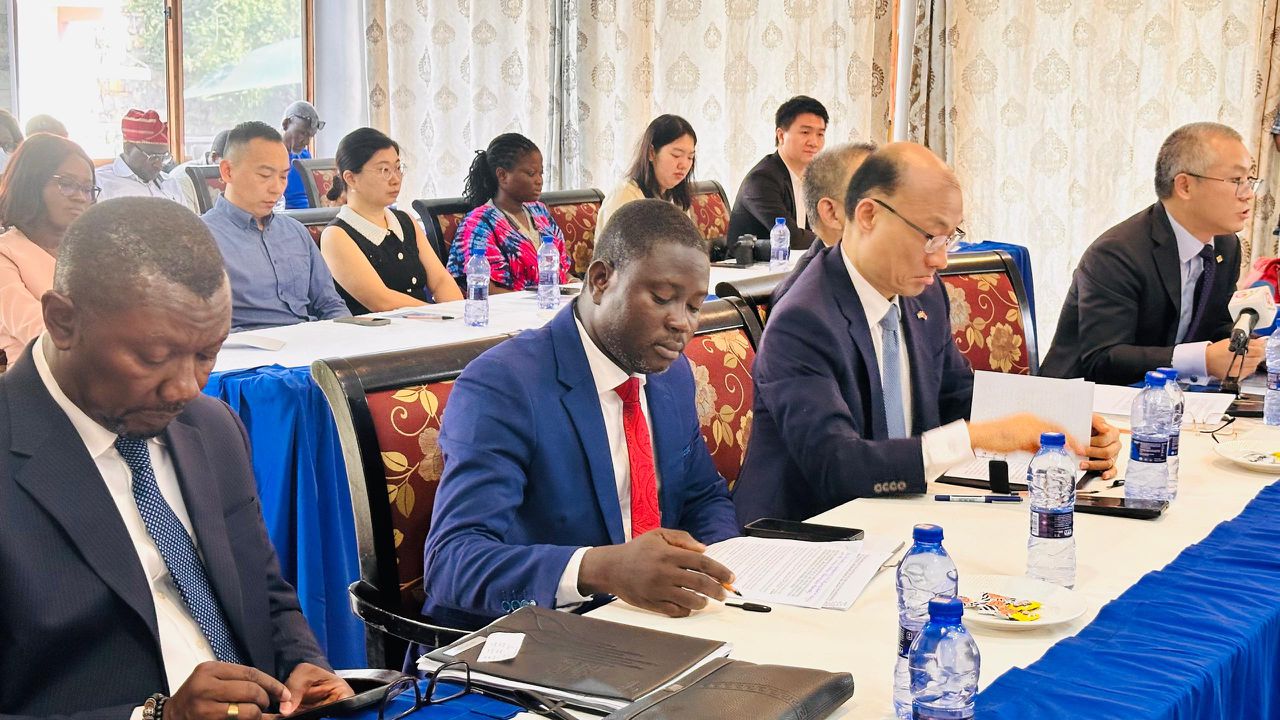
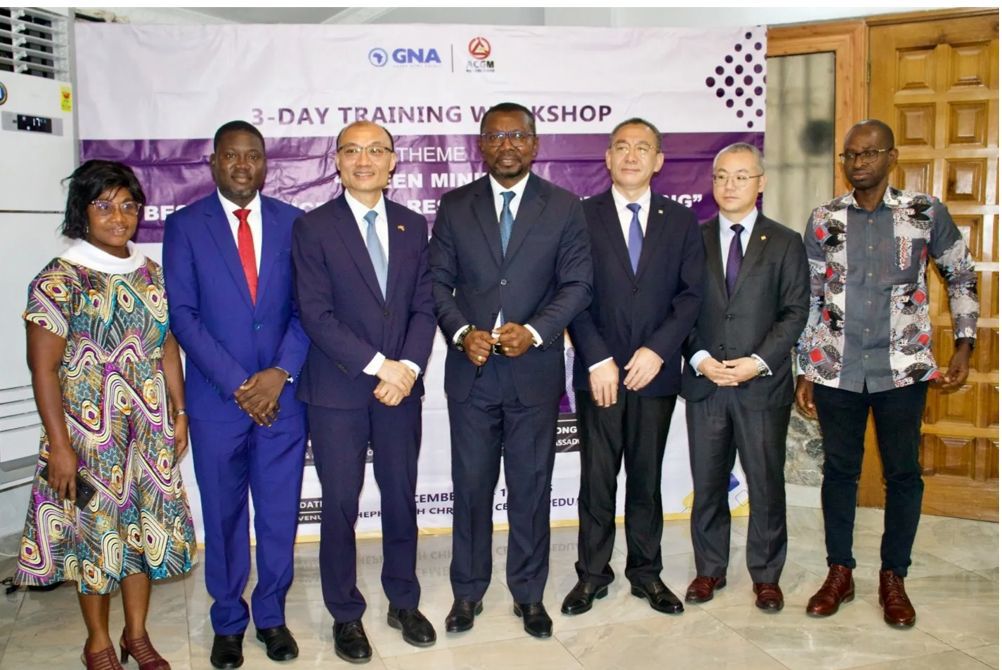
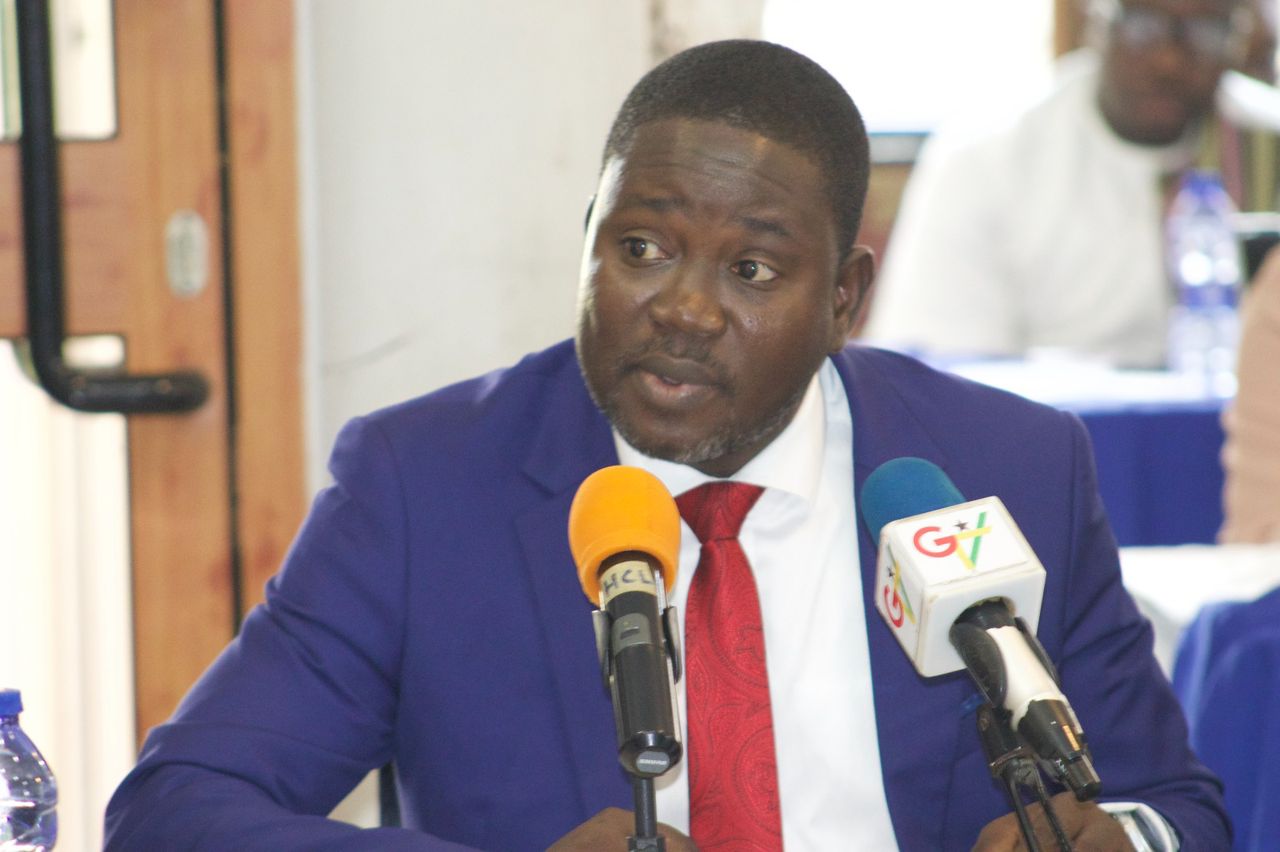
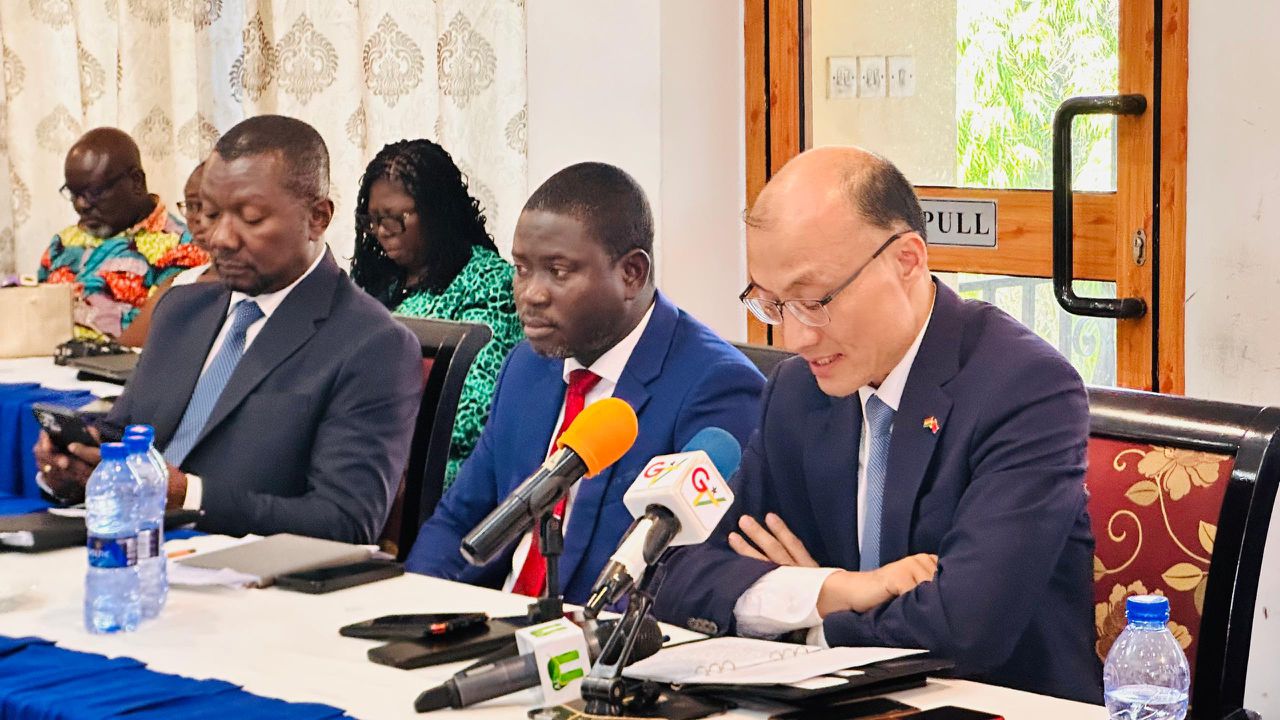
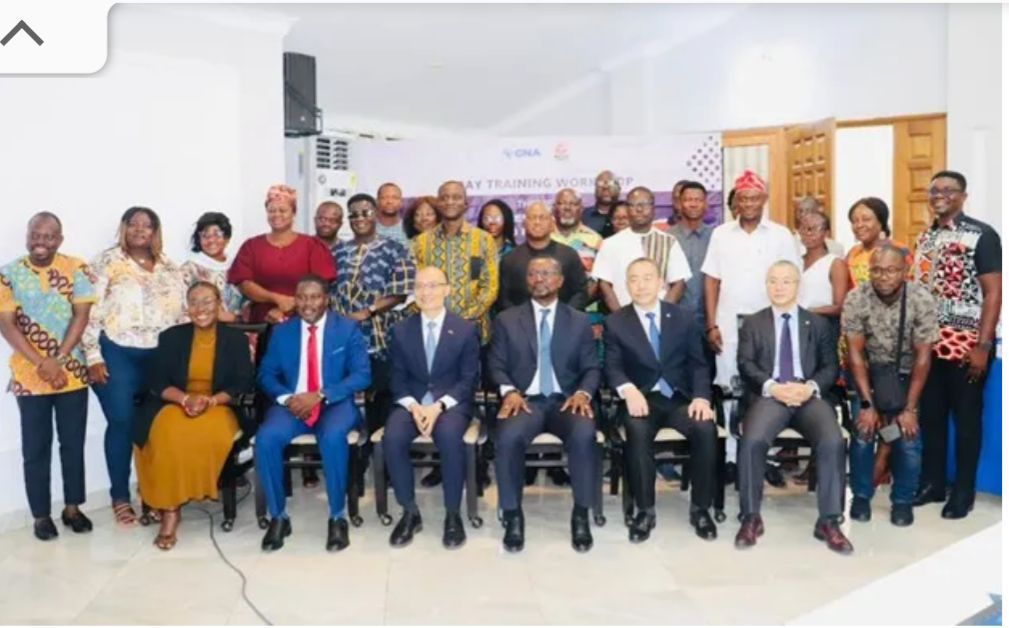
Speaking at the opening ceremony of a three-day training workshop for editors and reporters on the theme “Green Mining: Best Practices and Responsible Reporting” in Aburi on Thursday, December 11, 2025, the minister said mining activities must be managed carefully to reduce their negative impact on water bodies, land, and air quality.
The Minister of Lands and Natural Resources, Emmanuel Armah-Kofi Buah, has reiterated government’s commitment to sustainable mining practices and environmental protection, while urging journalists to adopt responsible and data-driven reporting to support the fight against illegal mining.
The keynote address was delivered on his behalf by Mr. Maxwell Klu, Deputy Chief Executive Officer of the Minerals Commission.
Mr. Buah described green mining as a sustainable approach to mineral extraction that minimizes environmental damage through renewable energy use, waste reduction, water conservation, mercury-free extraction techniques, community engagement, land reclamation, and carbon footprint reduction.
According to him, the adoption of green mining practices is a critical tool in addressing illegal mining, popularly known as galamsey, which he described as a serious threat to Ghana’s environment, socio-economic stability, and long-term development.
Legal and Policy Framework
The minister highlighted Ghana’s strong legal regime governing mining activities, noting that the Minerals and Mining Act, 2006 (Act 703), as amended by Acts 900 and 995, criminalizes mining without a license and prescribes severe penalties, including prison terms ranging from 15 to 25 years.
The law also bans mining in protected areas and strengthens enforcement through measures such as tighter controls on excavator imports.
He also referenced the Environmental Protection Act, 2025 (Act 1124) as a key legislative instrument aimed at safeguarding the country’s environment.
Beyond domestic laws, Mr. Buah said Ghana remains committed to international environmental standards, citing the country’s ratification of major global conventions, including the UN Framework Convention on Climate Change (UNFCCC), the Paris Agreement, and the Vienna Convention for the Protection of the Ozone Layer.
“These conventions, treaties and national laws are a testament to Ghana’s commitment to responsible mining and environmental stewardship,” he said.
Role of the Media
The minister stressed that the media plays a critical role in shaping public understanding of mining and environmental issues, urging journalists to prioritize technical knowledge, ethical accountability, and investigative, data-driven reporting.
He called on reporters to deepen their understanding of mining processes, laws, and regulatory frameworks, and to hold all stakeholders accountable while remaining fair, people-centered, and open to criticism.
Responsible reporting, he said, should also highlight reclamation efforts and interventions by institutions such as the National Anti-Illegal Mining Operations Secretariat (NAIMOS) and other agencies involved in combating illegal mining.
Government Interventions
Mr. Buah disclosed that government has laid before Parliament an instrument to revoke Legislative Instrument (L.I.) 2462, which allows the President to grant mining licenses in forest reserves.
The move, he said, aligns with broader national efforts to curb illegal mining and protect forest resources.
He further cited initiatives such as the Responsible Cooperative Mining and Skills Development Programme (rCOMSDEP) as part of government’s integrated strategy to address galamsey.
Industry Recognition and the Way Forward
Highlighting progress within the mining industry, the minister praised companies that have demonstrated excellence in green mining practices.
Newmont Ghana Gold Limited’s Ahafo South Mine emerged as the Best Green Mine at the 11th Ghana Mining Industry Awards (GMIA) in 2025, earning recognition for innovation, environmental stewardship, and community development.
AngloGold Ashanti Iduapriem Mine and Gold Fields Ghana Limited’s Tarkwa Mine were also commended for strong performance in areas such as carbon reduction, land and water management, active reclamation, and biodiversity restoration.
Mr. Buah said the Ministry envisions global mining firms and Green Mine award winners mentoring small-scale mining operations to help address illegal mining.
He concluded by calling on the media and the “fourth estate of the realm” to uphold ethical standards, collaborate with government, and help keep the public informed and protected.
“Green mining is a shared mission,” he said, urging journalists to engage credible data sources, adopt practical reporting tools, and promote multi-stakeholder dialogue.
The workshop is expected to enhance journalists’ capacity to report accurately and responsibly on mining and environmental issues in Ghana.
****END****
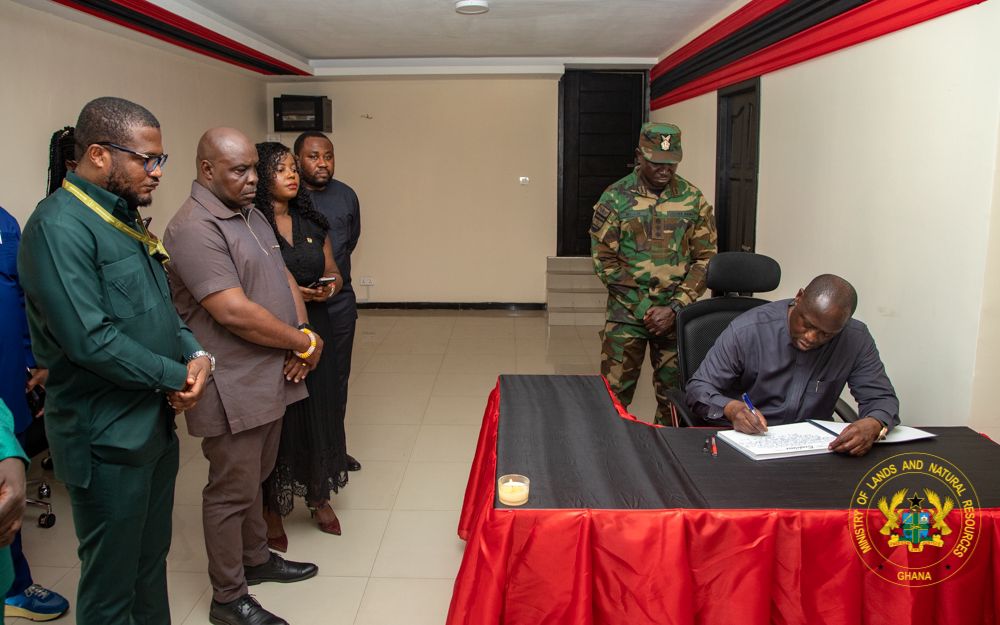
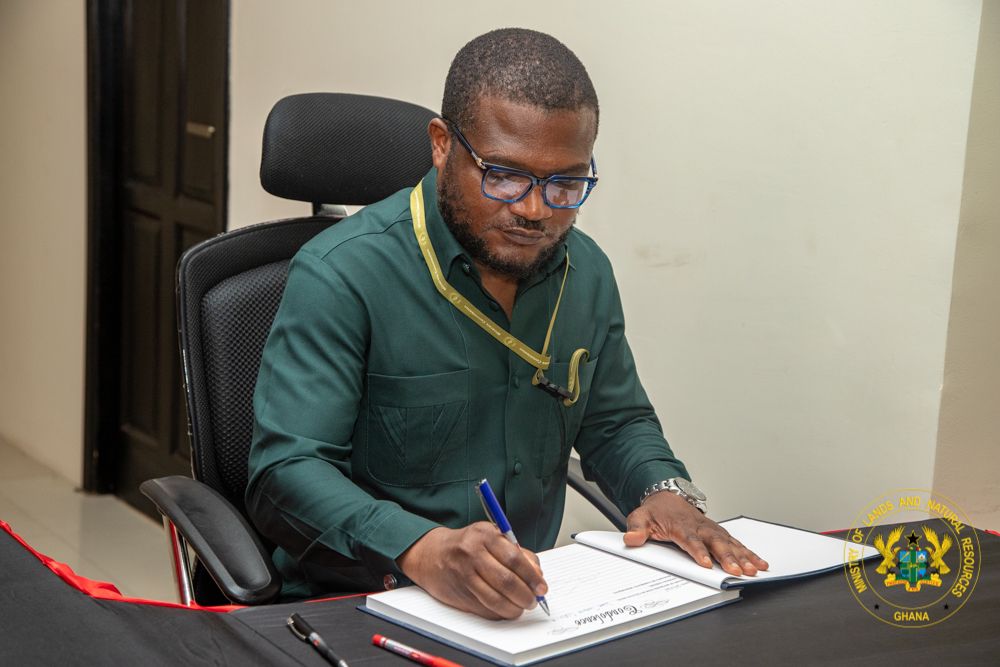
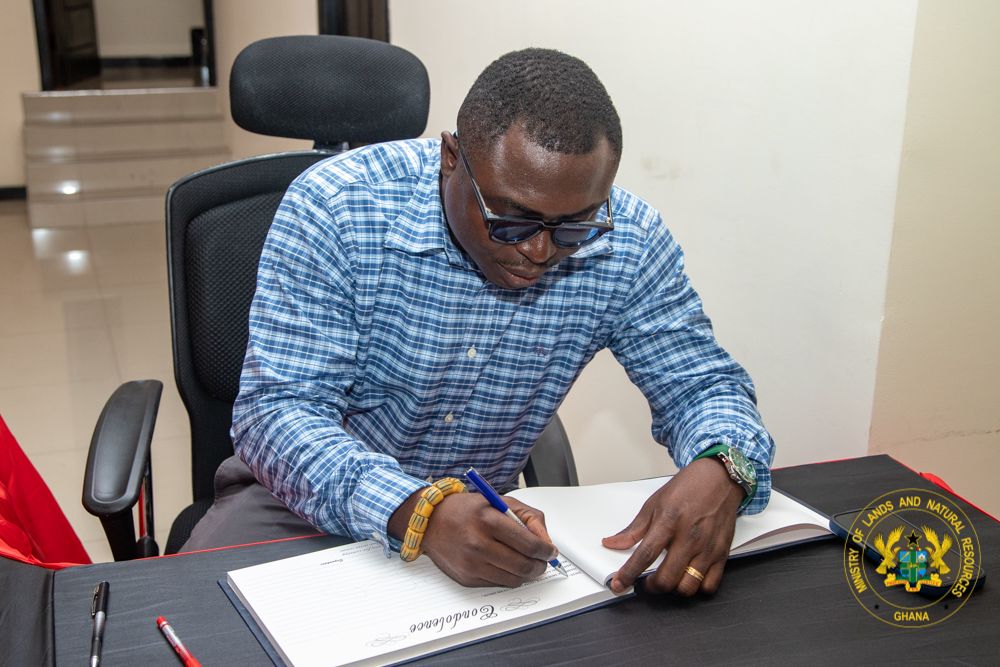
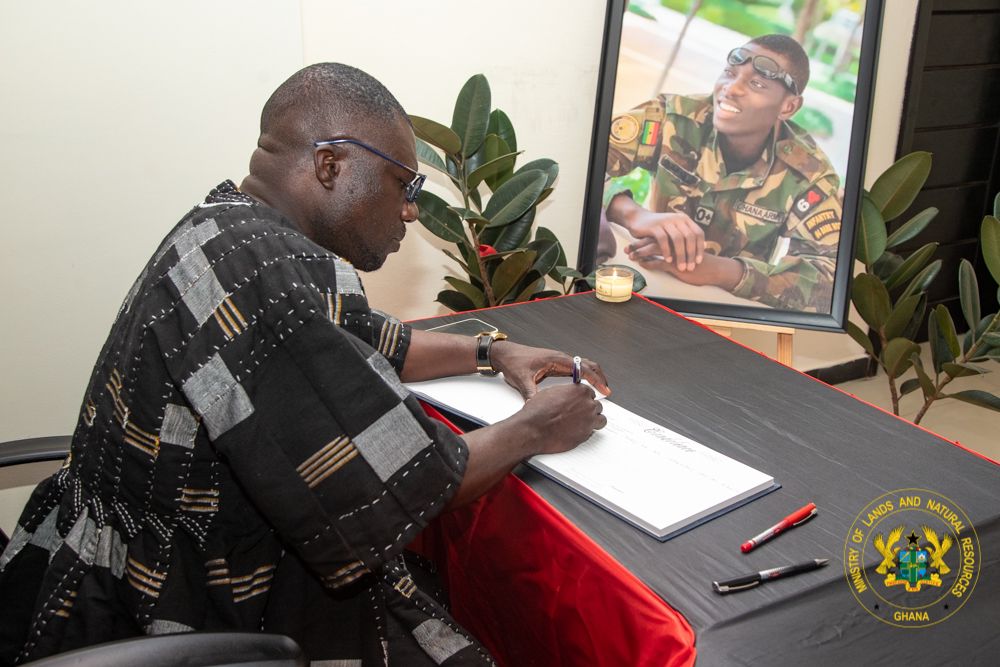
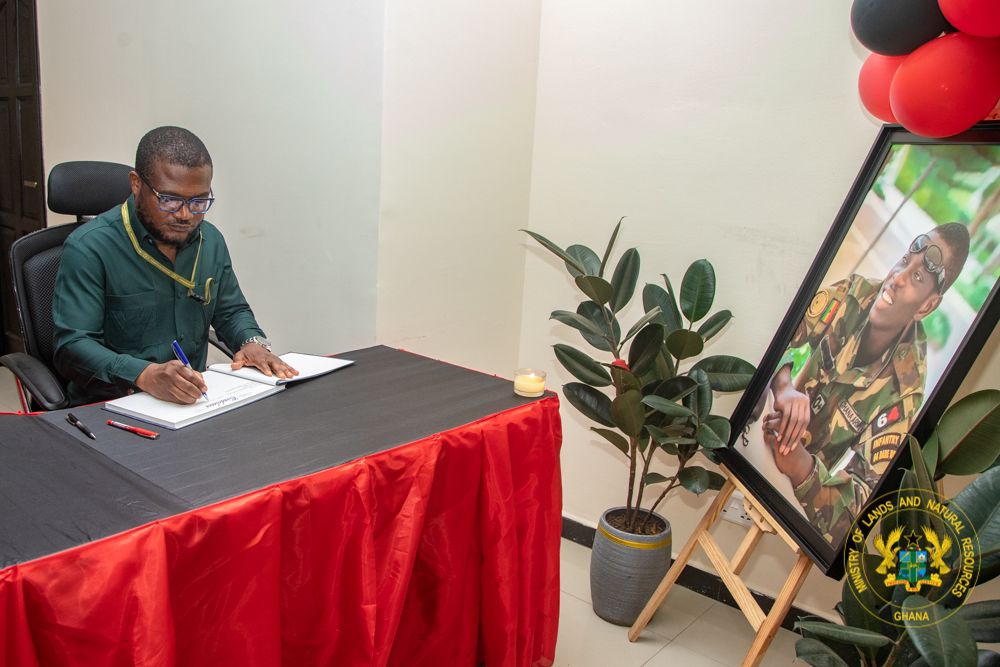
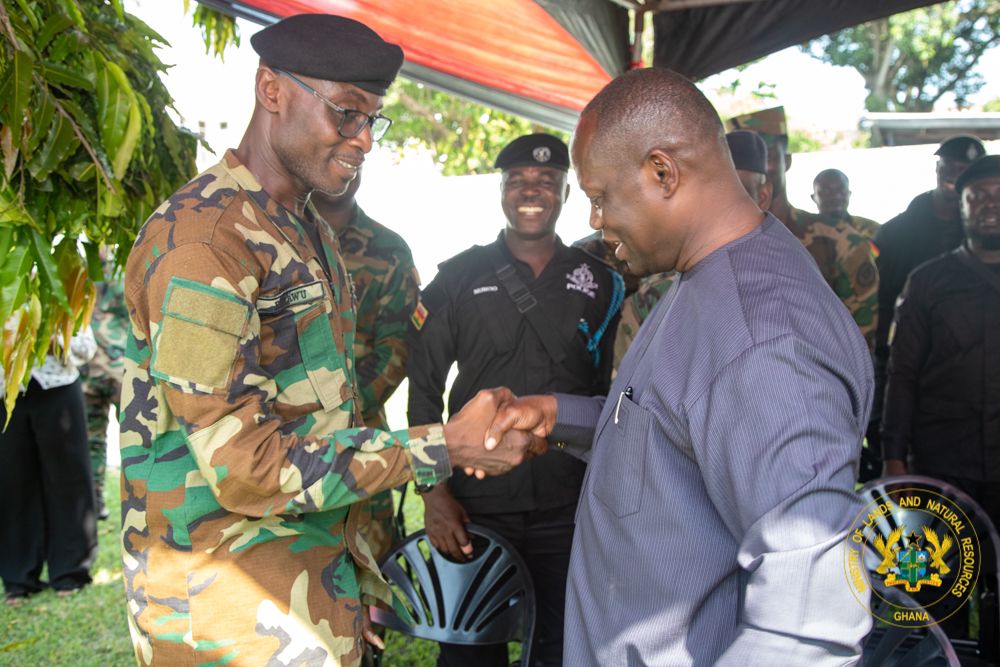
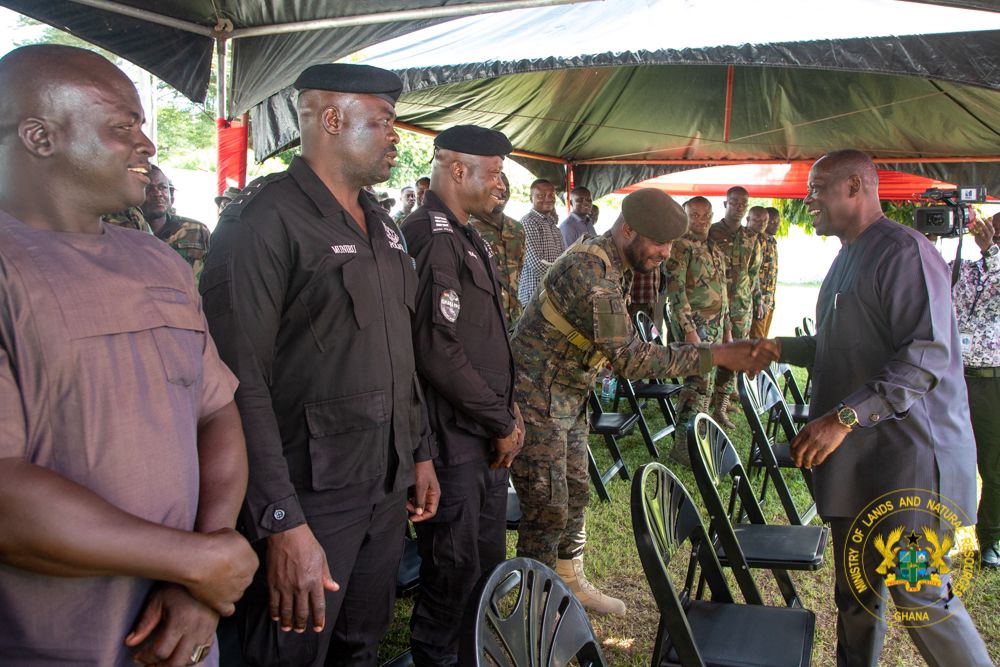
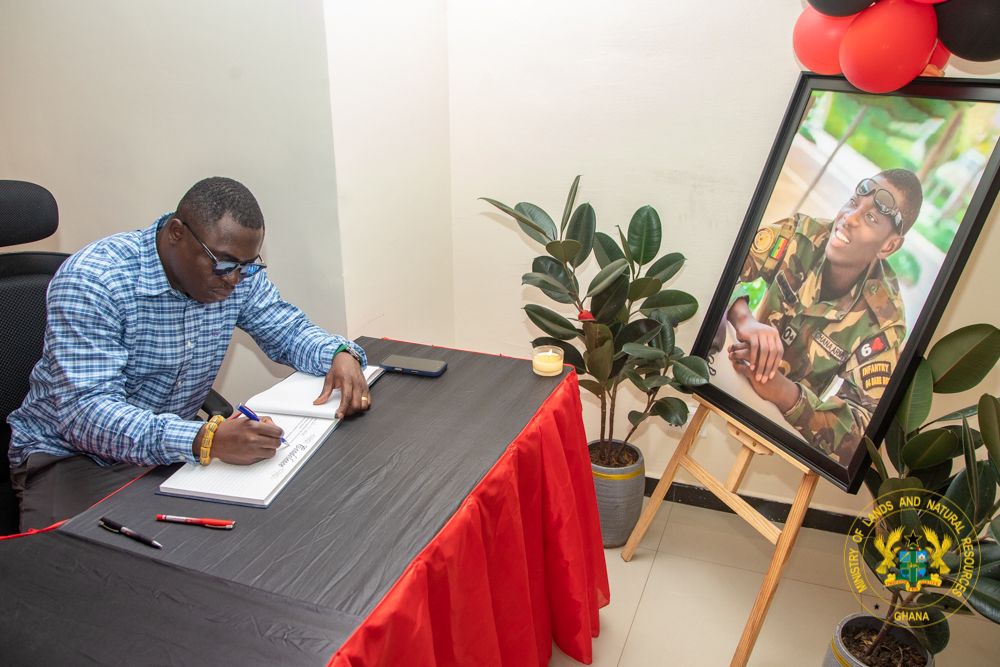
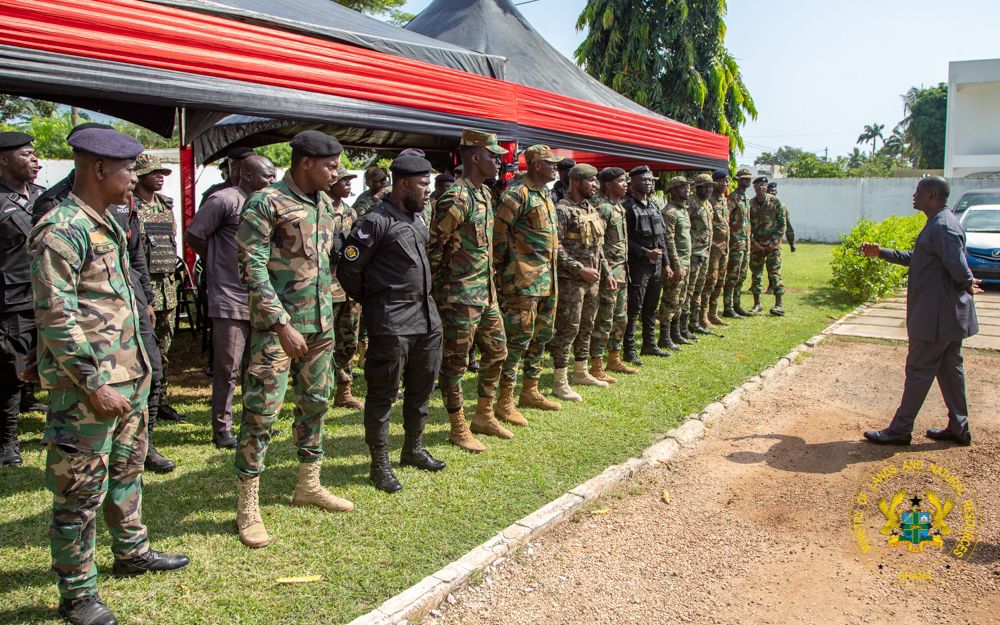
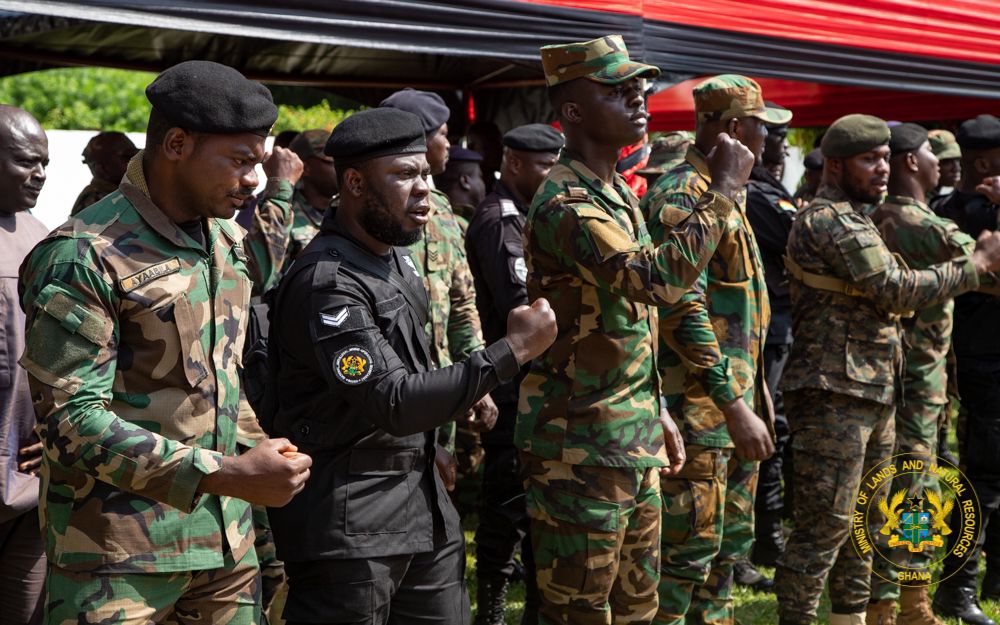
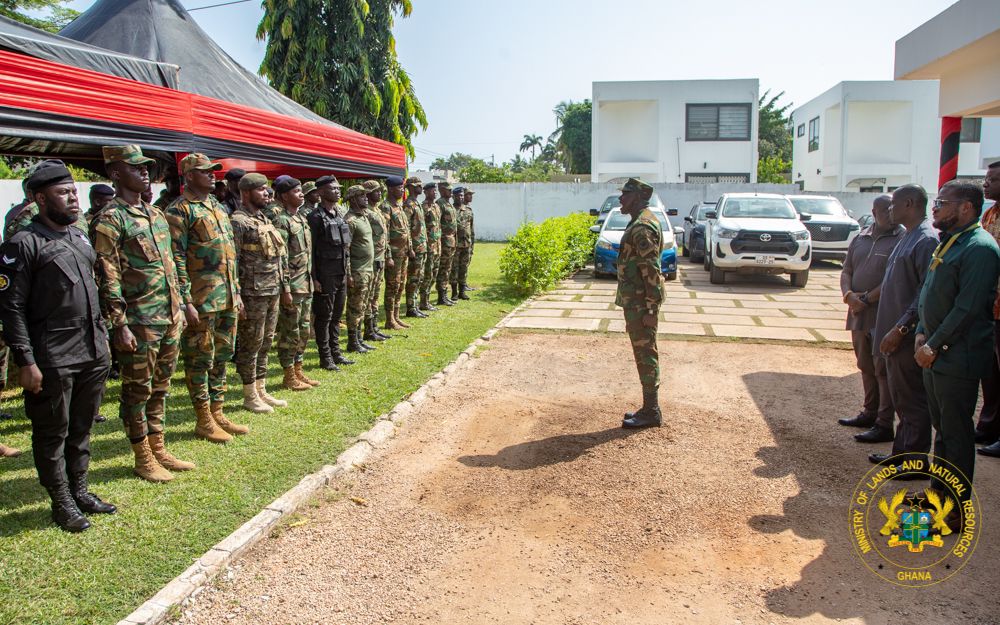
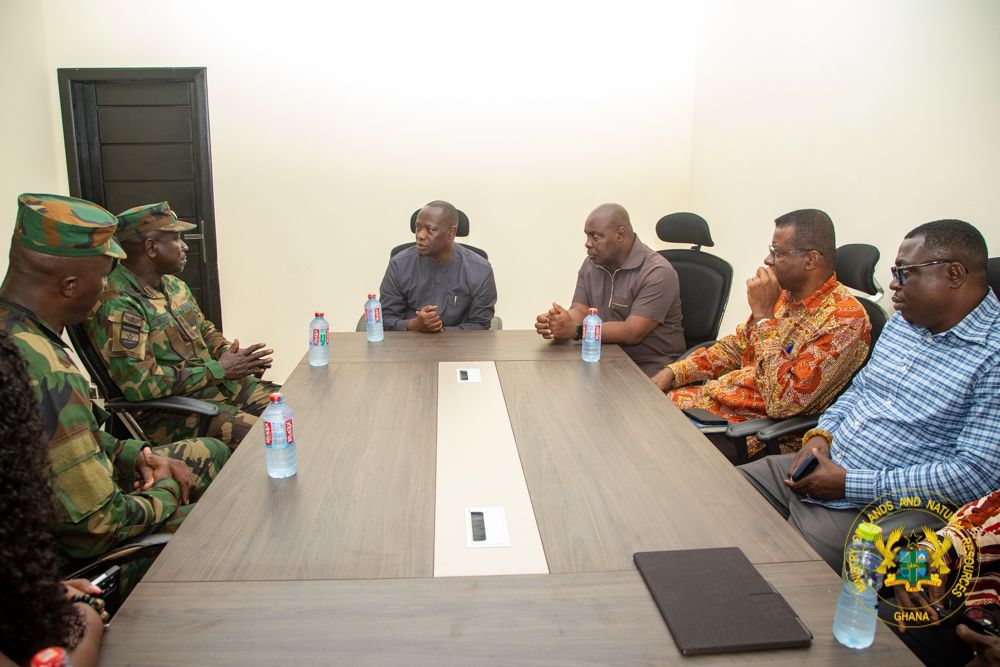
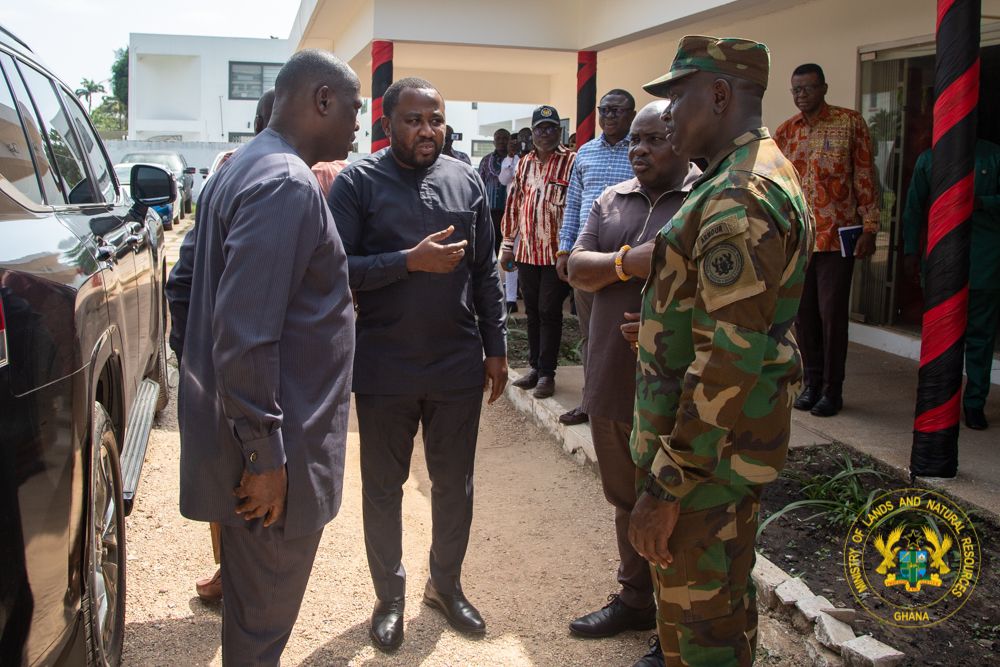
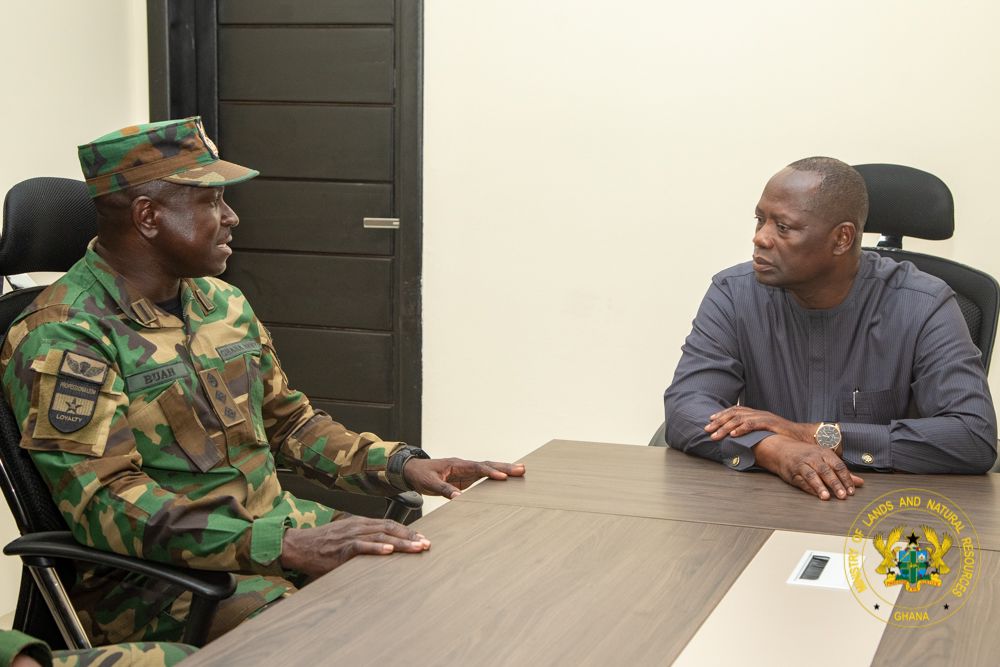
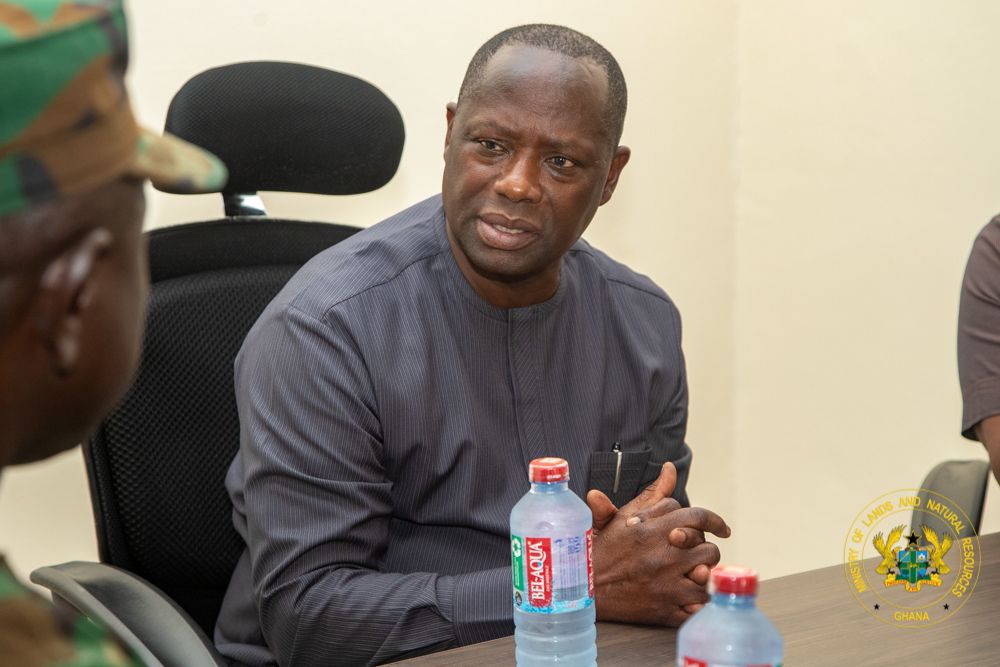
November 20, 2025 – The Minister for Lands and Natural Resources, Hon. Emmanuel Armah-Kofi Buah (MP), accompanied by Mr. Isaac Tandoh, Acting Chief Executive Officer of the Minerals Commission, and other senior officials, visited the National Anti-Illegal Mining Operations Secretariat (NAIMOS) to offer condolences to the team following the tragic loss of a taskforce member in a road accident near Obuasi.
During the visit, the Minister and his delegation commiserated with the leadership and members of the Secretariat. The Hon. Emmanuel Armah-Kofi Buah, on behalf of His Excellency the President of the Republic, President John Dramani Mahama, expressed sympathy and solidarity with the security forces.
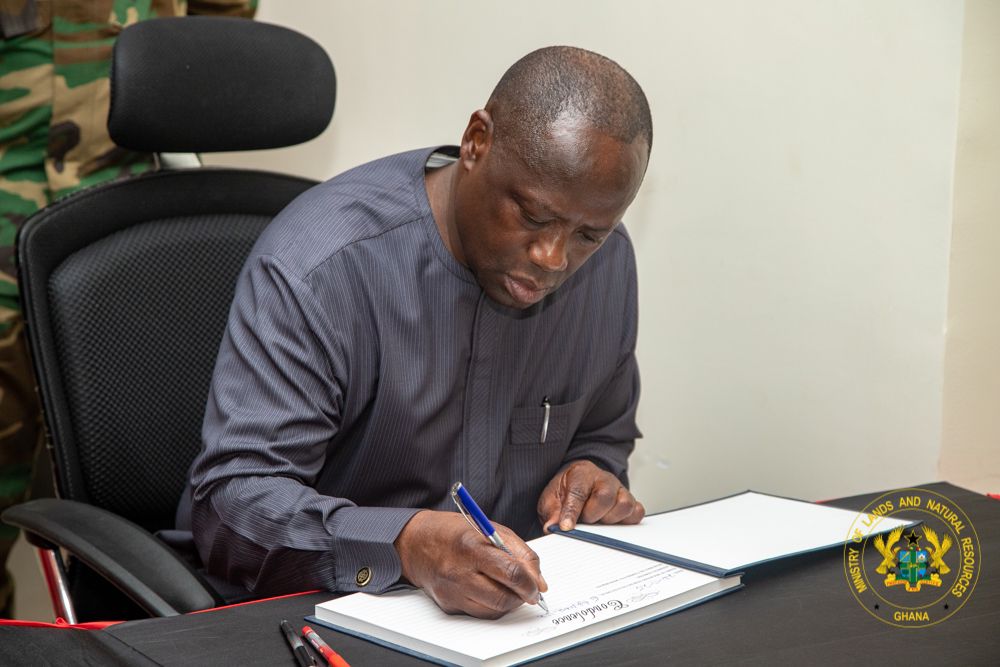
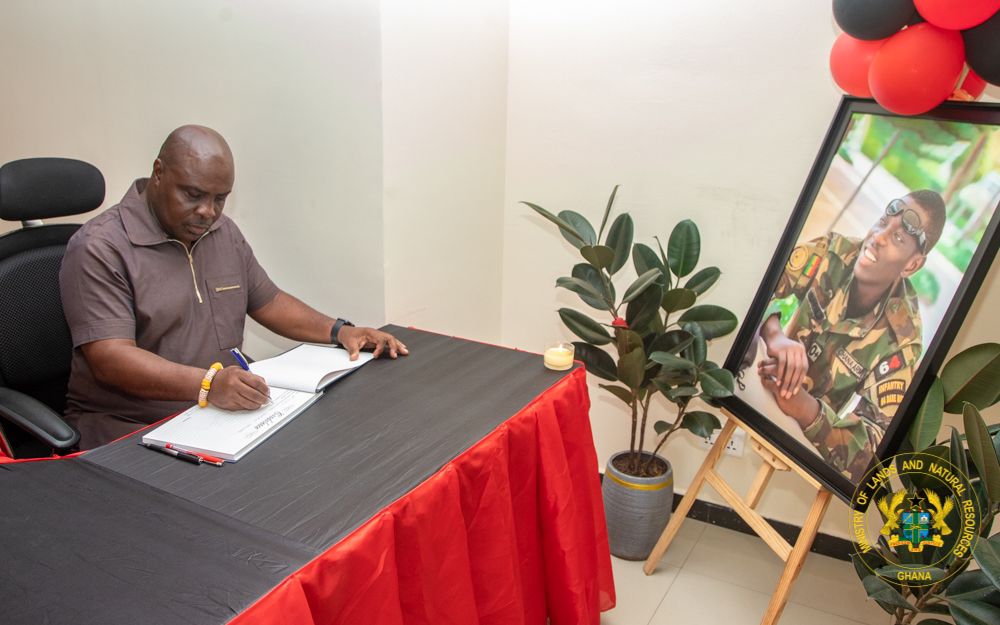
The Hon. Minister led the delegation to sign the book of condolence opened in honour of the fallen officer, recognizing his dedication to Ghana’s anti-illegal mining efforts. The Minister reaffirmed the Ministry’s commitment to the safety and welfare of frontline operatives, acknowledging the courage and sacrifice of the NAIMOS Officials. He assured them of government’s continued support, “This is a moment of shared grief, but also of renewed resolve. The nation stands with you. Your work is noble, and your fallen colleague’s legacy will not be forgotten” he remarked.
The Ministry and Minerals Commission are working with the bereaved family to provide support and ensure a dignified farewell for the departed Officer. The Minister commended the team’s resilience, professionalism, and dedication, stating, “In the face of adversity, the strength of a team is revealed. Let this moment of sorrow remind us of the profound impact of your service to Ghana. Together, we will uphold the values of integrity, courage, and commitment that define our collective mission.”
Issued by:
CORPORATE AFFAIRS AND INFORMATION TECHNOLOGY DEPARTMENT
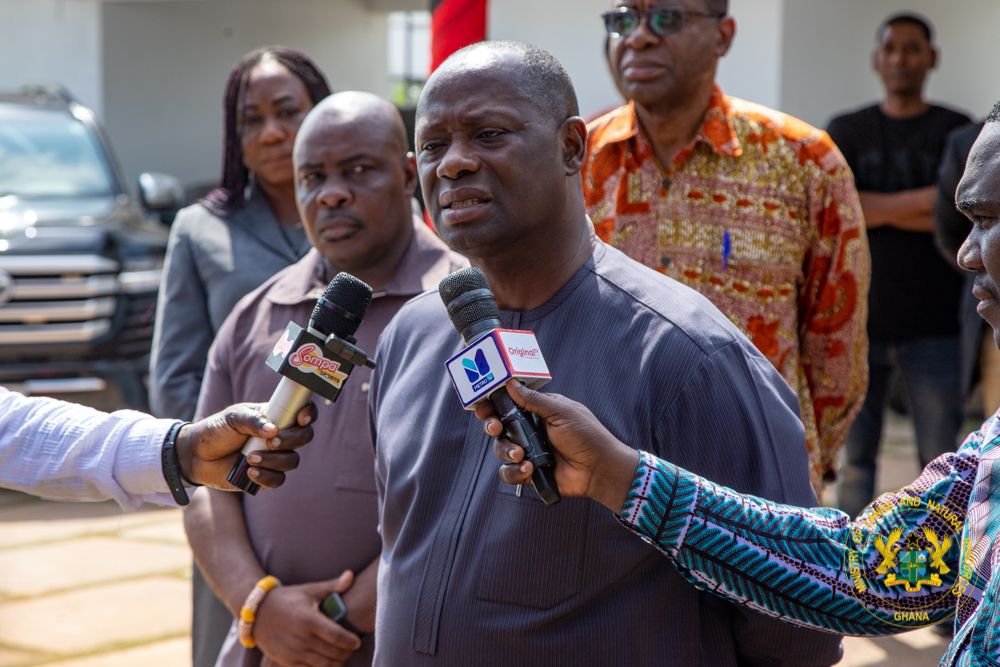
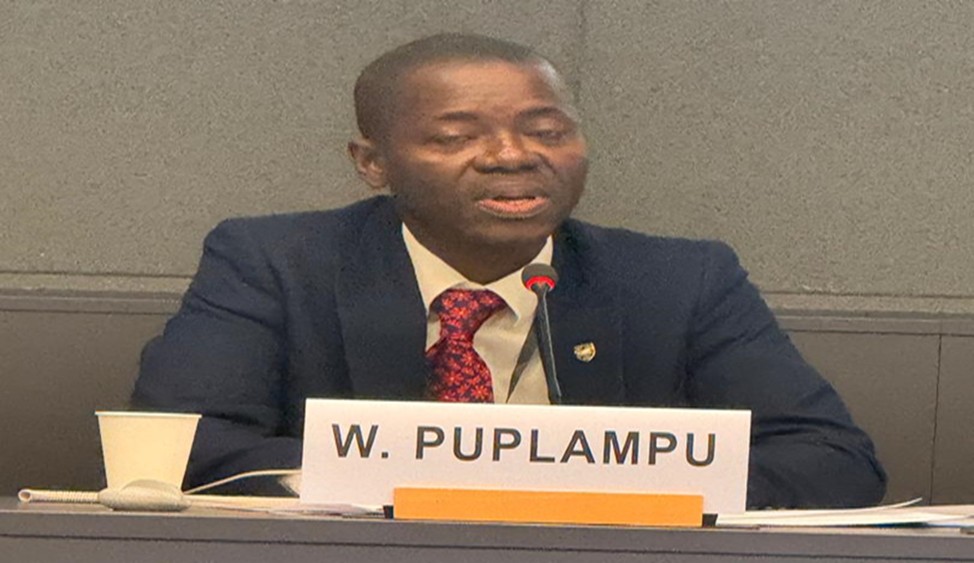
Wisdom Puplampu, Assistant Manager for Research & Statistics at the Minerals Commission, says Ghana is rapidly positioning itself as a strategic player in the global lithium market.
Speaking at the 21st Annual General Meeting (AGM) of the Intergovernmental Forum on Mining, Minerals, Metals and Sustainable Development (IGF) held at the Palais des Nations in Geneva, Puplampu highlighted the country’s emerging lithium sector as a new growth pole for the economy.
“Ghana’s lithium potential, primarily from hard-rock spodumene deposits in the Central and Western Regions, offers transformative opportunities for both national and regional development,” he said.
He noted that the Ewoyaa Lithium Project, developed by Atlantic Lithium Limited, remains the sector’s flagship, having advanced through feasibility studies, permitting stages, and state equity participation via the Minerals Income Investment Fund (MIIF).
Puplampu added that multiple exploration licenses granted to other companies indicate rising investor interest and broader geological potential.
Puplampu explained that Ghana is shifting away from the traditional dig-and-ship model toward downstream processing and value addition.
“Under the Green Minerals Policy, companies are required to conduct studies to evaluate domestic conversion of lithium and by-products such as feldspar for the ceramic industry.
This approach aims to create industrial supply chains, generate skilled employment, and support Ghana’s clean energy ambitions,” he said.
According to Puplampu, Ghana’s strategy balances investment attraction with national benefit. “The state’s equity participation through MIIF, strengthened local content provisions, and incentives for domestic processing ensure value retention.
Transparent governance, parliamentary oversight, and environmental safeguards provide investor confidence while promoting sustainable development,” he added.
Puplampu emphasized that as global demand for lithium surges, Ghana offers a stable, transparent, and strategically located alternative to dominant producers.
“By linking extraction with local processing and regional manufacturing under the African Continental Free Trade Area, Ghana is positioning itself not just as a supplier, but as a co-developer of industrial capacity, contributing to a more resilient global lithium supply chain,” he said.
The Ghanaian delegation included: Mr. Martin Kwaku Ayisi (Technical Advisor, Ministry of Lands and Natural Resources); Mrs. Helen Akpene Awo Ziwu (Solicitor General, Office of the Attorney General & Ministry of Justice); Dr. Ahmed Tijani (Head of Corporate Affairs and IT, Minerals Commission); Mrs. Leona Serwah Johnson-Abassah (Chief State Attorney); Mr. Wisdom B. Puplampu (Assistant Manager, Research and Statistics, Minerals Commission); and Mr. Gabriel Gaanu (Manager, Mining Sector, Domestic Tax Division, Ghana Revenue Authority).
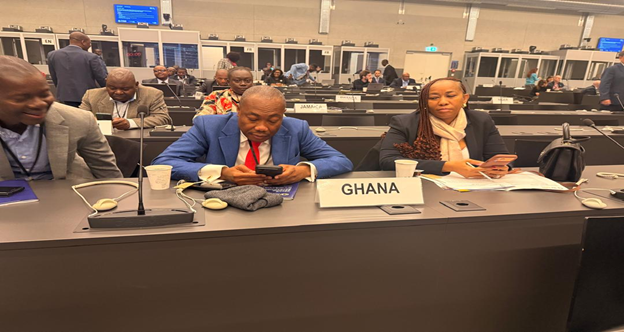
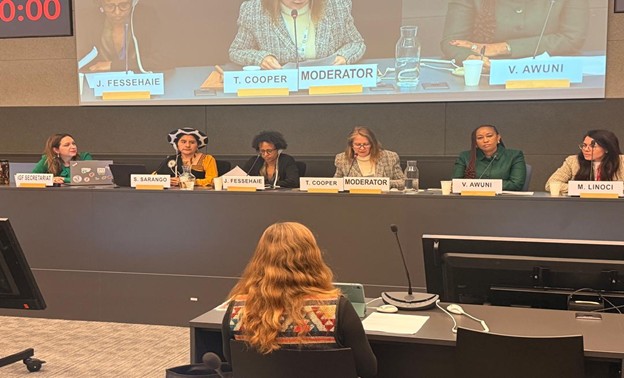
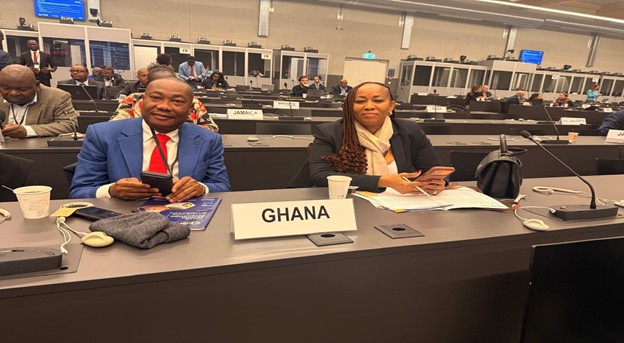
Victoria Awuni, Deputy Chief Executive Officer for Policy Planning, Mineral Titles & Local Content at Ghana’s Minerals Commission, has highlighted Ghana’s approach to inclusive mining at the 21st Annual General Meeting (AGM) of the Intergovernmental Forum on Mining, Minerals, Metals and Sustainable Development (IGF), held at the Palais des Nations in Geneva.
Speaking at the plenary session on “Value for All: Inclusive Strategies Across Mineral Value Chains,” Awuni showcased how Ghana’s mining sector leverages local content and procurement frameworks to promote inclusive employment, gender equality, and Small and Medium Enterprise (SME) participation.
Awuni noted that Ghana’s local content regime balances local and foreign expertise. Mining companies are required to reserve specific job opportunities for Ghanaian citizens while integrating foreign expertise to support technology transfer and productivity. Mine managers are expected to be Ghanaian nationals after five years of operation, and laws mandate employment opportunities for vulnerable groups, including persons with disabilities.
Gender Equality
Awuni explained that Ghanaian legislation requires mining firms to demonstrate gender parity through localization plans submitted to the Minerals Commission. While a 2022 IGF study showed women were mostly in clerical roles, Ghana is now reinforcing women’s participation in technical and managerial positions through legal and policy measures
Mining generates opportunities for supporting businesses. Ghana has earmarked 51 goods and services for local businesses with significant local shareholding, generating USD 2.6 billion in 2024 and creating employment beyond the mines themselves.
Awuni highlighted community development initiatives, including ICT labs in schools, technology training, and road construction projects such as Newmont’s 10.2 km Afrisipa-Tekyire bypass and Goldfields’ 33 km Tarkwa-Damang road reconstruction. These projects enhance connectivity, digital skills, and energy access in host mining communities.
Awuni concluded that Ghana’s experience demonstrates how coherent local content policies ensure mining contributes not only to national revenue but also to broad-based social and economic benefits.
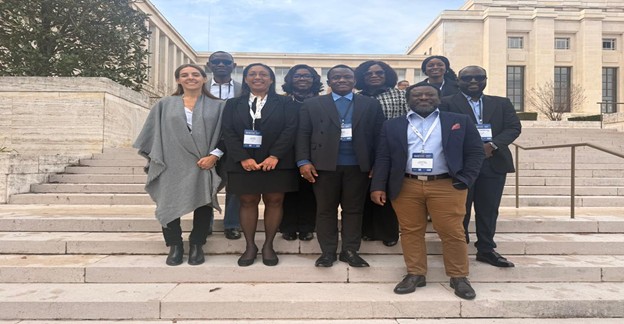
The Ghanaian delegation included: Mr. Martin Kwaku Ayisi (Technical Advisor, Ministry of Lands and Natural Resources); Mrs. Helen Akpene Awo Ziwu (Solicitor General, Office of the Attorney General & Ministry of Justice); Dr. Ahmed Tijani (Head of Corporate Affairs and IT, Minerals Commission); Mrs. Leona Serwah Johnson-Abassah (Chief State Attorney); Mr. Wisdom B. Puplampu (Assistant Manager, Research and Statistics, Minerals Commission); and Mr. Gabriel Gaanu (Manager, Mining Sector, Domestic Tax Division, Ghana Revenue Authority).
<<END OF STORY>>
info@mincom.gov.gh
Minerals House
#12 Switchback Road
Residential Area
Cantonment - Accra
GL- 060 -1131